Specifications
Grading & Market Data
Estimated Value
Valuation data is not yet available for this type. We publish estimates only when they can be derived from recorded auction results.
Overview
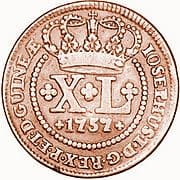
Issued during the modern period, the 40 Réis - José I - Angola (Angola) (1753–1757), denomination 40 Réis, reflects the political and economic transformations of an industrializing world. Modern coins are often distinguished by their high relief portraiture, patriotic symbolism, and precise metallic specifications — hallmarks of an era when national currencies became instruments of state prestige. This coin from the modern era was issued at a time when gold and silver standards governed international monetary relationships. The stability — and eventual breakdown — of the gold standard is reflected in the changing composition and design of modern coinage, as governments gradually transitioned from precious metal money to token coinage and, ultimately, to fully fiat monetary systems. Modern coins produced before this transition carry both numismatic and intrinsic metal value. Struck in copper, this coin reflects the practical necessities of small-denomination coinage. Copper's abundance, affordability, and workability made it ideal for the coins of everyday commerce throughout history. Many copper coins of the 18th and 19th centuries feature remarkably detailed designs, as engravers took full advantage of the metal's surface qualities. For collectors and investors, this coin represents an opportunity to own a tangible piece of monetary and artistic heritage. When evaluating any example, condition is paramount: third-party grading by NGC (Numismatic Guaranty Company) or PCGS (Professional Coin Grading Service) provides an objective assessment and significantly enhances liquidity. Proper storage in acid-free holders, away from humidity and direct light, will preserve the coin's surfaces for future generations.
Find This coin
Our expert concierge will find the coin for you.