Specifications
Grading & Market Data
Estimated Value
Valuation data is not yet available for this type. We publish estimates only when they can be derived from recorded auction results.
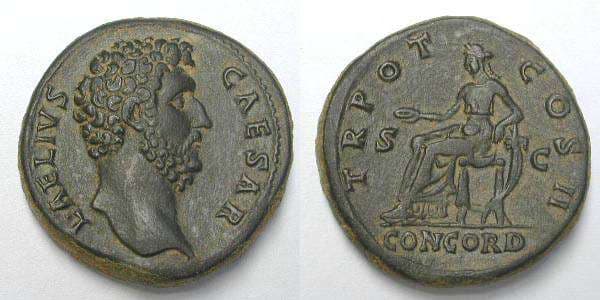
RIC 1057 Sear5 3979 Aelius AE Sestertius
RIC 1057 Sear5 3979 Aelius AE Sestertius
Overview
A characterful Bronze coin with rich patina bringing the ancient world vividly to life. Its distinctive surface character, acquired over centuries, adds authentic beauty. issued in Roman Empire, classified as a Sestertius, this coin provides an invaluable window into the political, economic, and cultural conditions of its era. This ancient coin's design represents the artistic achievements of its minting tradition, with motifs carrying political, religious, and cultural significance. Ancient coinage transcended its role as a medium of exchange to serve as a powerful symbol of political authority, religious devotion, and artistic achievement. Since the first coins were struck in the Kingdom of Lydia around the 7th century BC, coinage spread from the Mediterranean world along the Silk Road to Asia, producing diverse forms reflecting each civilization's unique aesthetic sensibilities. Each ancient coin bears the portrait of a ruler, the image of a patron deity, or the glory of an empire, transmitting the spiritual world of ancient peoples across more than two millennia. Ancient coin manufacturing, known as 'hammered coinage,' represents the pinnacle of classical metallurgy. A heated metal blank (flan) was placed between two engraved dies—a fixed anvil die and an upper trussel die—and struck with a hammer to simultaneously impress both obverse and reverse designs. This process depended entirely on the skill of the moneyer, with variations in striking force, blank temperature, and die wear creating subtle differences that give each ancient coin its unique character. Die engravers were among the finest artists of their age, and some signed their work, making them subjects of ongoing art-historical research. Ancient coins served as the fastest mass medium of their time, announcing new rulers and military victories across vast empires. Greek city-states emblazoned their patron deities and symbols on coinage as expressions of civic identity. The iconography preserved on ancient coins—religion, mythology, propaganda, and daily life—constitutes an irreplaceable cultural archive for archaeologists and art historians. Roman and Italian coins are among the most actively traded in the global numismatic market. Imperial gold aurei and silver denarii command premium prices at Heritage Auctions, CNG, and NAC. An ideal entry point for ancient coinage collecting. Authentication begins with precise measurement of weight, diameter, and thickness against published specifications. Die engraving style, serif forms, and letter spacing should be compared with known genuine specimens. XRF analysis provides non-destructive verification of metallic composition. For high-value coins, third-party certification by PCGS or NGC is strongly recommended, as certified coins benefit from guaranteed authenticity and enhanced market liquidity. Proper environmental management is essential for long-term coin preservation. Storage areas should maintain 18-22°C temperature and 40-50% relative humidity, avoiding sudden fluctuations. Use only archival-quality, acid-free coin holders, flips, or capsules—never PVC-containing materials, which cause irreversible green contamination. Always handle coins wearing cotton or nitrile gloves, holding by edges only, as fingerprint oils react with metals causing permanent damage. Cleaning is generally discouraged: improper washing destroys natural patina and significantly reduces market value. Consult a professional conservator if cleaning appears necessary. Numismatic collecting offers both intellectual enrichment and asset preservation potential. Over the past fifty years, rare coin markets have demonstrated long-term returns comparable to equities and gold, with particular resilience during inflationary periods. However, successful coin investment requires expertise in grading, provenance assessment, rarity evaluation, and market trend analysis. PCGS/NGC-certified coins offer superior liquidity through major auction houses and dealer networks worldwide. Even for investment-focused collectors, choosing coins that personally appeal ensures sustained motivation for long-term holding. A systematic, theme-based approach to collecting is recommended—whether by chronology, geography, or denomination. A 'quality over quantity' philosophy has proven most effective for long-term value preservation. Keywords: ancient, coin, numismatic, collectible, bronze, Roman Empire, auction, investment, grading, rare coins, antique coins.
Find This coin
Our expert concierge will find the coin for you.