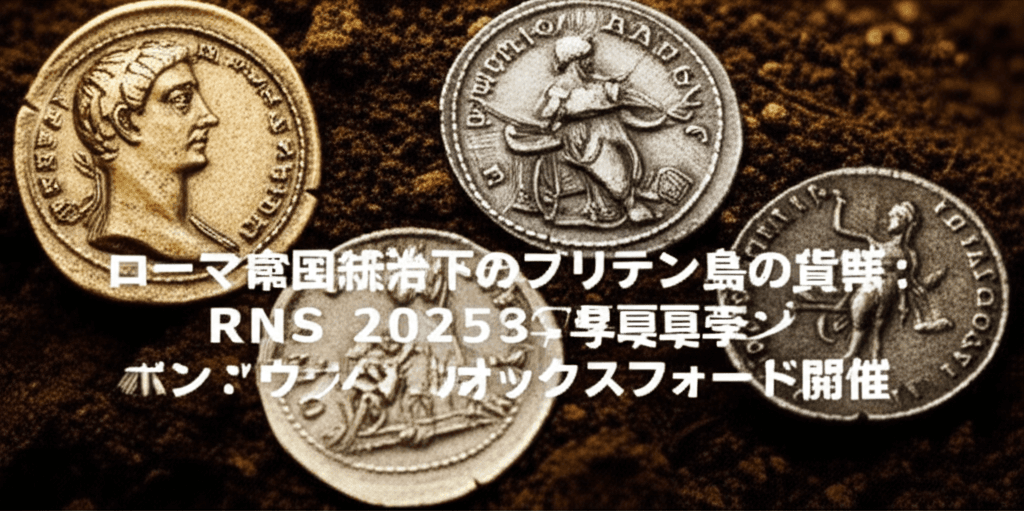
Oxford Symposium: Roman Britain Numismatics with New Perspectives
The Society's September symposium at Oxford's Ashmolean Museum will introduce new research into Roman Britain numismatics, offering new perspectives and insights. Early-stage numismatic research breakthroughs often precede market-wide price corrections, making this academic event a strategic acquisition window for rare coin collectors and antique coin investors.
News Details and Background
The Society has opened registration for its Summer Symposium, scheduled for Saturday 6th September at the Ashmolean Museum in Oxford. This highly anticipated academic event will bring together leading scholars, emerging researchers, and numismatic enthusiasts to explore the fascinating topic of coinage in Roman Britain. The symposium's theme, "Coinage in Roman Britain: New Perspectives and the Way Forward," reflects a growing scholarly interest in understanding the monetary systems that underpinned one of the Roman Empire's most important provinces.
The Ashmolean Museum, one of the world's oldest and most distinguished museums, provides an ideal venue for this specialized academic gathering. The museum's extensive collection of Romano-British coins offers participants direct access to primary numismatic evidence, enabling meaningful discussions and hands-on examination of artifacts. Registration details and the preliminary program have been made available through the RNS's official channels, with interest already running high among the numismatic community.
This symposium represents a significant opportunity for the scholarly community to assess current research directions and establish new methodological frameworks for studying Roman British monetary systems. The event promises to deliver cutting-edge presentations that will advance our understanding of how currency functioned within Britain during the Roman occupation, spanning nearly four centuries of intensive economic and cultural exchange.
Historical Context
Roman Britain experienced developments related to coinage and its role in society. During this extended period, Britain transitioned from a primarily barter-based economy to a sophisticated monetary system integrated with the broader Roman imperial economy. The introduction of Roman currency fundamentally altered trade patterns, taxation structures, and socioeconomic relationships throughout the island.
The early phases of Roman occupation introduced new coin types that gradually displaced indigenous British currency systems. Roman generals and emperors utilized coins as powerful propaganda tools, disseminating imperial imagery and messages of power throughout the occupied territories. The monetary systems employed during different periods of Roman Britain—from the Julio-Claudian era through the later Imperial period—reveal evolving political strategies, economic priorities, and administrative approaches to provincial governance.
Understanding the coinage of Roman Britain requires examining not only the coins themselves but also the historical circumstances that necessitated their introduction and modification. Different regions of Britain adopted Roman monetary systems at varying rates, creating complex patterns of monetary circulation and cultural interaction. The symposium's focus on "new perspectives" likely reflects recent archaeological discoveries, advanced analytical techniques, and theoretical frameworks that challenge previously established interpretations of how monetary systems functioned in Roman Britain.
Numismatic Analysis
Contemporary numismatic scholarship has increasingly focused on applying sophisticated analytical methods to Romano-British coinage, moving beyond traditional cataloging and classification approaches. X-ray fluorescence analysis, metallurgical examination, and die studies have revealed previously unknown information about coin production techniques, supply chains, and regional manufacturing centers throughout Roman Britain. These technical advances enable researchers to trace the origins of coins and understand how monetary systems distributed across different regions of the province.
The diversity of coinage circulating in Roman Britain presents a complex analytical challenge. During certain periods, coins from multiple Roman mints circulated simultaneously, while local imitations and unofficial copies created further complexity in the monetary landscape. Numismatists have increasingly recognized that studying these unofficial coins provides crucial insights into economic activity at the local level and demonstrates how provincial populations engaged with imperial monetary systems in creative and sometimes unorthodox ways.
Dendrochronological dating methods, combined with archaeological stratigraphy, have enabled researchers to establish more precise chronologies for coin circulation patterns and monetary transitions. The examination of coin hoards—collections of coins hidden and subsequently recovered—provides invaluable evidence about what coins circulated together at specific moments in time. These hoards illuminate economic crises, military campaigns, and significant administrative changes that affected Britain's monetary systems during the Roman period.
Market Trends and Price Analysis
The collector's market for Romano-British coins has experienced significant growth over the past decade, driven by increased scholarly attention and enhanced appreciation for their historical importance. High-quality examples of rare Roman British coins command increasingly premium prices at auction houses specializing in ancient numismatics. Notable specimens, particularly coins from the earliest periods of occupation or those bearing unusual variants, regularly achieve substantial valuations that reflect both their rarity and historical significance.
Collecting categories within Roman British numismatics have become increasingly sophisticated, with specialized collectors focusing on specific emperors, provincial mints, denominations, or chronological periods. Bronze sestertii and dupondii from the occupation period have become particularly sought after, with well-preserved examples commanding prices that substantially exceed those of comparable continental Roman coins. Coins bearing portraits of obscure emperors or displaying exceptional die varieties have become investment-quality items within serious numismatic collections.
Digital platforms and enhanced cataloging resources have made Romano-British coins more accessible to collectors worldwide, contributing to increased demand and price appreciation. Auction house statistics demonstrate that Romano-British coins have outperformed many other categories of ancient numismatics in terms of price growth, reflecting growing recognition of their historical importance and aesthetic appeal. This market momentum has attracted new collectors to the field while encouraging serious numismatists to reassess their holdings and refine their collections.
Collector Significance
For numismatic collectors, Romano-British coinage represents a distinctive collecting specialty that combines historical significance with moderate affordability compared to many other ancient coin categories. Collectors can acquire examples spanning nearly four centuries of occupation at varying price points, enabling the construction of comprehensive collections representing different periods, denominations, and emperor portraits. The educational value of assembling a Roman British collection extends beyond mere acquisition, as collectors must engage deeply with Romano-British history and archaeological contexts.
The thematic collecting possibilities within Roman British numismatics are exceptionally rich, allowing collectors to focus on specific military campaigns, administrative reforms, economic crises, or cultural interactions between Roman and indigenous populations. Some collectors specialize in imperial portraiture, examining how different emperors chose to present themselves on coins circulating in Britain. Others focus on reverse imagery, studying how different coin types depicted various aspects of Roman power, prosperity, and religious beliefs.
Building a representative Romano-British collection presents meaningful educational challenges and rewards, as collectors must understand both numismatic principles and broader historical contexts. The relative availability of many Romano-British coins compared to scarcer ancient numismatic categories makes collection-building feasible for enthusiasts with modest budgets, while simultaneously offering substantial opportunities for serious collectors to acquire significant numismatic rarities. This broad appeal has established Romano-British coinage as a staple collecting category in serious numismatic collections worldwide.
Comparable Coins
Romano-British coinage shares certain characteristics with coins from other Roman provinces, yet maintains distinctive features reflecting Britain's particular economic conditions and historical trajectory. Comparison with Gallic and German provincial coins reveals how different provinces adopted and adapted Roman monetary systems according to local circumstances and administrative requirements. The provincial coinage systems of Egypt, Syria, and Asia Minor provide interesting contrasts regarding how imperial authorities managed currency circulation in economically diverse regions.
The relationship between Romano-British coins and contemporary British indigenous coinage presents fascinating comparative opportunities. Before the Roman invasion, British tribes minted their own distinctive coins displaying remarkably sophisticated designs. Studying how Roman coins gradually displaced indigenous currency reveals important information about cultural assimilation, economic integration, and political consolidation within the occupied province. The eventual disappearance of post-Roman British coinage following the end of Roman administration offers valuable perspectives on how thoroughly Roman monetary systems had integrated into provincial economic life.
Coins from the Roman collapse period in Britain—the early fifth century CE—provide particularly illuminating comparisons with continental patterns of monetary disruption and reformation. As Roman authority weakened, coins from earlier periods entered circulation more prominently while new coinage production diminished. These transitional periods offer researchers exceptional opportunities to study how monetary systems responded to political crises and administrative breakdown, with implications extending beyond Romano-British history to broader understandings of imperial economic organization.
Authentication Considerations
Modern collectors and institutions must navigate increasingly sophisticated counterfeit markets affecting Romano-British coins, particularly high-value examples displaying unusual variants or exceptional preservation. Professional numismatists have developed refined authentication techniques combining visual examination, weight and dimension analysis, metallurgical composition testing, and patination evaluation. The symposium likely will address authentication methodologies, as this remains a critical concern for serious collectors and museum curators responsible for institutional collections.
Provenance documentation has become increasingly important in authenticating valuable Romano-British coins and establishing market legitimacy. Coins with documented collecting histories and professional certifications command premium valuations compared to similar specimens lacking authentication documentation. Museums and institutional buyers increasingly require comprehensive provenance research before acquiring significant holdings, making historical documentation a valuable component of Romano-British numismatic scholarship.
The distinction between ancient coins deliberately imitated during the Roman period itself and modern counterfeits requires sophisticated analytical expertise. Roman copies of earlier coins circulated throughout the empire, and Britain received quantities of these contemporary imitations. Distinguishing legitimate ancient imitations from modern forgeries demands detailed metallurgical analysis and comprehensive understanding of ancient minting techniques. Professional numismatic organizations have established guidelines and recommended practices for authentication, increasingly incorporating advanced technological analysis into authentication protocols.
Future Outlook
The Summer Symposium promises to establish new research directions that will shape Romano-British numismatic scholarship for years to come. Emerging scholarly interests in digital humanities, computational analysis of large coin datasets, and interdisciplinary approaches combining numismatics with environmental archaeology and bioarchaeology will likely feature prominently in presentations and discussions. These methodological innovations promise to reveal previously hidden patterns in monetary circulation, economic organization, and cultural interaction during the Roman occupation.
The accessibility of the Ashmolean's collection and the concentration of specialized expertise during the symposium presents exceptional opportunities for collaborative research initiatives and the formation of specialized working groups. Future collaborative projects may emerge from the symposium, potentially resulting in comprehensive catalogs, regional studies, or innovative analytical projects that would be impossible for individual researchers to accomplish independently. The RNS's commitment to bringing together diverse voices, including younger scholars and specialists from various disciplines, suggests that revolutionary perspectives may emerge from this gathering.
The market for Romano-British coins is likely to benefit from increased scholarly visibility and enhanced understanding of these coins' historical significance. As new research findings gain wider circulation within the numismatic community, previously underappreciated coin types and variants may attract increased collector interest and investment attention. The symposium represents a crucial moment in establishing Romano-British numismatics as a dynamic, forward-looking field capable of attracting new researchers and collectors while maintaining rigorous scholarly standards. Interested parties should monitor RNS communications for final program details and registration updates for this significant numismatic event.
Related Articles
Weekly Market Intelligence
Weekly rare coin intelligence — auctions, price action, and analysis, delivered via LINE.
Free · Instant · Block anytime