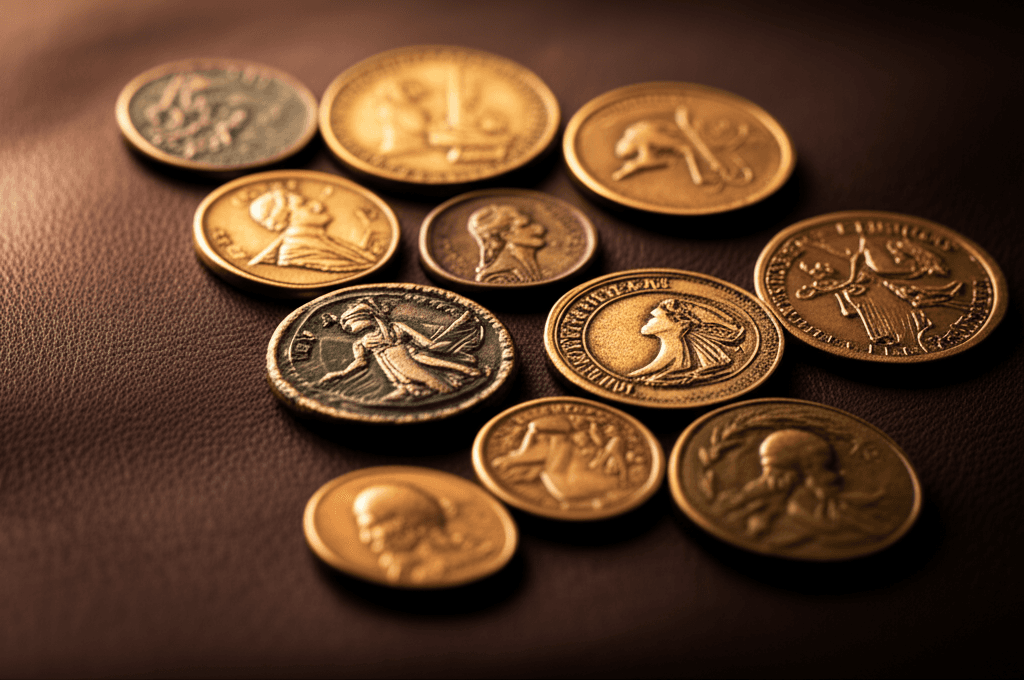
Antique Coin Market Spurs Specialized Insurance Growth
Market

Antique Coin Market Spurs Specialized Insurance Growth

Verdict:Action: Collectors with specific needs for their items may find traditional policies insufficient, necessitating specialist services.
Summary

As rare coin collections surge in value, traditional homeowners' insurance proves inadequate, spurring specialized providers to employ numismatic experts for tailored appraisals and coverage. New policies address theft, damage, mysterious disappearance, and nuanced market risks. This infrastructure maturation signals institutional recognition of numismatics as a serious asset class and precedes broader portfolio integration.

News Details and Background The collectibles insurance market has entered a period of significant expansion, with specialized providers increasingly recognizing the unique needs of coin and numismatic enthusiasts. Insurance companies are now offering tailored policies specifically designed for rare coins, ancient artifacts, and other collectibles that require specialized valuation and protection strategies. These services address a critical gap in the market where traditional homeowners' or general property insurance policies often provide inadequate coverage for high-value numismatic collections. As collector communities engage in discussions about asset protection, the demand for these specialized services continues to accelerate, reflecting broader awareness of investment risks among numismatists. Professional insurance brokers specializing in collectibles are developing comprehensive coverage options that go beyond standard property protection. These policies typically include coverage for theft, damage, loss, and mysterious disappearance, with provisions specific to the quirks of the numismatic market. Insurers are now employing numismatic experts to evaluate collections and establish appropriate coverage limits, ensuring that policy holders receive protection commensurate with their collections' actual market values. The emergence of these specialized services represents a maturation of the collectibles market, indicating that institutional recognition of numismatic assets as legitimate investments is strengthening across the financial services industry. ## Historical Context The need for specialized collectibles insurance emerged gradually as the rare coin market expanded throughout the late twentieth century. For decades, collectors relied primarily on standard homeowners' insurance policies, which often contained restrictive clauses limiting coverage for precious metals and high-value items. This period of market volatility and insurance gaps prompted the first specialized insurance providers to enter the market, recognizing an underserved niche with significant growth potential. The evolution of collectibles insurance paralleled the professionalization of numismatic collecting itself. As grading services like PCGS and NGC established standardized evaluation systems, insurance companies gained reliable tools for assessing collection values. Collectibles insurance is available, with at least one provider offering coverage options such as insuring parts of a collection off-site. ## Numismatic Analysis From a numismatic perspective, the value of rare coins and collectibles presents unique challenges for insurance providers that traditional property insurers struggle to address. The value of numismatic assets depends on multiple factors including rarity, condition, provenance, historical significance, and current market demand—variables that fluctuate considerably and require specialized expertise to evaluate accurately. Insurance professionals working in this sector must understand grading standards, population reports, and market sentiment in ways that conventional property adjusters cannot. The authentication and valuation processes for numismatic collections demand collaboration between insurance companies and recognized numismatic experts who can provide comprehensive assessments that satisfy both underwriting requirements and collector needs. The condition census concept, fundamental to serious numismatic collecting, presents particular challenges for insurers. When a collector owns one of only a handful of known specimens in a specific grade, determining replacement value becomes extraordinarily complex. Insurance providers must account for the possibility that no comparable sale has occurred in recent years, requiring educated projections based on auction results, dealer pricing, and market trends. This uncertainty has driven insurance companies to develop relationships with major auction houses and numismatic dealers who can provide current market intelligence and historical precedent data for valuation purposes. ## Market Trends and Price Analysis The contemporary rare coin market has experienced substantial appreciation over the past decade, with many segments significantly outpacing inflation and traditional investment vehicles. This appreciation has directly increased the financial motivation for collectors to secure proper insurance coverage, as the replacement cost of major collections now frequently exceeds hundreds of thousands or even millions of dollars. Insurance company data indicates that average collection values among their policyholders have increased by thirty to forty percent in recent years, reflecting both the addition of new pieces and appreciation of existing holdings. This trend has particular significance for investors who view numismatic assets as portfolio diversification tools alongside traditional securities and real estate. Premium pricing for collectibles insurance has remained relatively stable despite rising collection values, allowing collectors to secure adequate protection without prohibitive costs. Most specialized policies charge annual premiums ranging from zero point five to one point five percent of the insured collection value, comparable to or lower than the costs associated with fine art insurance. Market competition among insurance providers has actually driven premiums downward in many segments as companies vie for market share among growing collector populations. The accessibility of affordable specialized insurance has further accelerated market growth by removing a significant barrier that previously deterred collectors from pursuing serious accumulation strategies. ## Collector Significance For serious numismatists, appropriate insurance coverage represents a cornerstone of responsible collection management. Collectors who have invested substantial financial resources into their holdings recognize that insurance provides essential protection against catastrophic loss scenarios including theft, fire, flood, and other emergencies. The peace of mind provided by comprehensive coverage allows collectors to focus on the enjoyment and scholarly aspects of numismatics without constant anxiety about asset protection. Additionally, documented insurance coverage facilitates estate planning and the eventual disposition of collections, making it easier for heirs to understand collection values and execute collectors' wishes regarding distribution. The relationship between insurance and collecting extends beyond simple risk mitigation into broader questions of collection documentation and organization. Insurance companies typically require detailed inventories of insured collections, including photographic documentation, condition assessments, and valuation information. This documentation process, while potentially burdensome initially, provides significant collateral benefits by creating comprehensive records that collectors can reference for research, trading decisions, and exhibition purposes. Many collectors report that the discipline of assembling insurance documentation deepens their knowledge of their own collections and facilitates more informed acquisition decisions going forward. ## Comparable Coins Various segments of the collectibles market have adopted specialized insurance approaches that offer lessons applicable to numismatics. Fine art collectors, for instance, have relied on specialized insurance for decades, with providers developing sophisticated valuation methodologies and coverage provisions specific to paintings, sculptures, and antiquities. The rare book market has similarly benefited from specialized coverage designed to address the unique vulnerabilities and valuation challenges associated with literary collectibles. Jewelry and precious stone insurance has evolved to address the combination of intrinsic material value and subjective aesthetic value that characterizes high-end gemstone collections. The numismatic insurance industry has drawn substantially from these adjacent markets, adapting proven approaches while tailoring them to the specific characteristics and requirements of coin collecting. The development of specialized insurance for sports memorabilia and vintage trading cards offers particularly relevant parallels to numismatic insurance. Like rare coins, authenticated sports memorabilia and trading cards require grading services, condition assessment expertise, and valuation based on comparable sales data. The growth of this insurance market segment demonstrates how collecting communities can successfully advocate for specialized coverage when traditional insurance proves inadequate. Insurance companies have discovered that collectors in these categories represent reliable customers with strong retention rates and relatively predictable claims histories, making them attractive market segments. ## Authentication Considerations Authentication and grading play critical roles in collectibles insurance underwriting, as insurers must verify that claimed valuations reflect genuine authentication standards. Insurance companies increasingly require that high-value numismatic items be certified by recognized grading services such as PCGS, NGC, or ANACS before they can be included in specialized policies at claimed values. This requirement protects insurance companies from fraud while simultaneously motivating collectors to seek professional authentication for their holdings. Certified slabs provide insurers with documented evidence of condition grades and authenticity that significantly simplifies claims processing and dispute resolution. For ungraded or historically authenticated coins, insurance companies typically conduct independent evaluations by numismatic specialists before establishing coverage. These evaluations examine physical characteristics, historical documentation, and comparative market data to establish appropriate valuations and authentication status. The rise of third-party authentication services has actually benefited the insurance industry by providing standardized assessment frameworks that facilitate consistent evaluation across different insurance providers and geographic markets. Insurers have responded by developing proprietary expertise and relationships with independent numismatic consultants who provide authentication and valuation services that exceed the scope of standard grading services. ## Future Outlook The specialized collectibles insurance market appears positioned for continued expansion as the numismatic community grows and matures. Younger collectors entering the hobby increasingly recognize the importance of insurance from the outset of their collecting activities, a shift that suggests long-term market growth as these cohorts expand their holdings. Insurance companies are responding by developing more sophisticated digital platforms that simplify the process of documenting collections, obtaining valuations, and managing policies. Mobile applications now allow collectors to photograph items, store condition documentation, and maintain updated valuations without requiring extensive paperwork or in-person consultations. Technological advances promise to further streamline the insurance process while enhancing protection capabilities for collectors. Blockchain-based authentication systems and digital provenance records may eventually integrate with insurance underwriting to provide unprecedented transparency and security. Climate-controlled storage facilities increasingly offer integrated insurance packages that combine physical protection with comprehensive coverage, creating packages that appeal particularly to collectors with significant holdings. As numismatic collecting continues its transition toward mainstream investment recognition, specialized insurance services will likely become universally expected components of responsible collection management practices, fundamentally changing how collectors approach asset protection and portfolio management.

Related Articles

LINE Subscription

Weekly Market Intelligence

Weekly rare coin intelligence — auctions, price action, and analysis, delivered via LINE.

Free · Instant · Block anytime