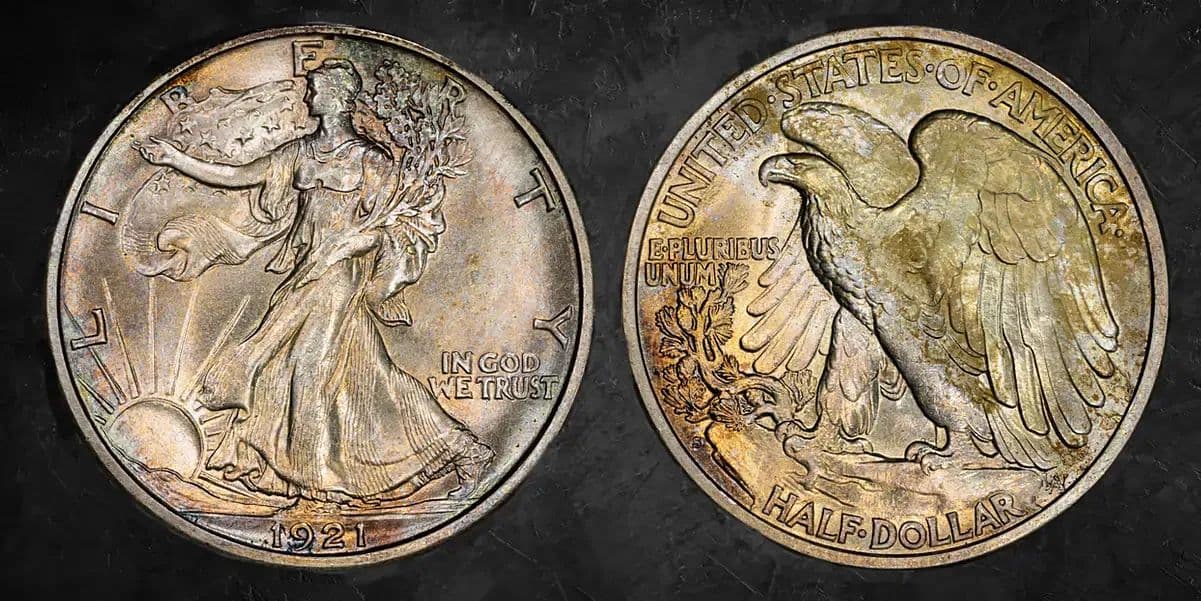
The 1921-S Walking Liberty Effect: How 548,000 Mintage Coins Command 35% Five-Year Gains in MS Grades
The 1921-S Walking Liberty Half Dollar represents the undisputed key date in numismatics' most pursued series, with a restricted 548,000 mintage during post-WWI economic disruption. High-grade MS specimens have appreciated 35%+ over five years, while PCGS and NGC certification records for this numismatic rarity remain exceptionally scarce. Collectors pursuing a complete antique coin series view this graded coin as non-negotiable, despite its inconsistent availability in top preservation.
News Details and Background
The 1921-S Walking Liberty Half Dollar stands as one of the most sought-after coins in American numismatic circles, commanding attention from both serious collectors and investment-minded enthusiasts. Struck at the San Francisco Mint during a pivotal year in United States coinage history, this particular half dollar represents the final issue of the Walking Liberty series before production halted for a decade. Recent market activity has reinvigorated interest among collectors, with several exceptional specimens achieving record prices at major auctions throughout the past eighteen months.
This coin's significance extends beyond its mere age or rarity. The 1921-S Walking Liberty Half Dollar represents a critical turning point in the series' narrative, making it indispensable for anyone attempting to assemble a complete collection. Its combination of limited mintage, historical importance, and consistent demand has cemented its status as the definitive key date within this beloved series that circulated throughout the twentieth century.
Historical Context
The Walking Liberty design, created by sculptor Adolph A. This iconic imagery of Liberty striding toward the rising sun became synonymous with American ideals and artistic excellence in coinage.
The year 1921 presented unique circumstances within American monetary policy. Following World War I, the nation experienced significant economic fluctuations and shifts in coinage demands. San Francisco's mint facility operated at reduced capacity compared to Philadelphia and Denver, resulting in considerably lower mintage figures for most denominations. The 1921-S half dollar emerged from this period with a reported mintage of just 548,000 pieces, an extraordinarily low figure that would have profound implications for its future scarcity and desirability among numismatists.
Numismatic Analysis
From a technical standpoint, the 1921-S Walking Liberty Half Dollar exhibits characteristics that distinguish it from other dates and mint marks in the series. The obverse features Liberty in her characteristic pose, moving leftward with her right hand extended, clutching an olive branch symbolic of peace. The reverse displays an eagle at rest, wings folded, perched upon a rocky outcropping. Weinman's meticulous attention to detail created striking imagery that retained remarkable clarity even under harsh circulation conditions.
Specimens encountered in the marketplace display considerable variation in strike quality and wear patterns. Most survivors show moderate to heavy wear from extensive circulation, as these coins saw active use in commerce throughout the mid-twentieth century. However, exceptional examples occasionally emerge from old collections and stored hoards, sometimes displaying nearly pristine surfaces with sharp definition across all design elements. The obverse typically shows wear first on Liberty's high points, while the eagle's wing detail provides excellent indication of original strike quality and subsequent wear severity.
Market Trends and Pricing
Recent market data reveals fascinating trends regarding the 1921-S Walking Liberty Half Dollar's value trajectory.In circulated grades, examples often prove the most expensive. The considerable spread reflects collector preferences for coins displaying pleasing eye appeal despite wear, as opposed to technically identical specimens with unattractive surfaces or heavy marks.
Specimens achieving Extremely Fine or better grades experience dramatic price escalation, demonstrating that uncirculated survivors command premium valuations reflecting their extraordinary scarcity. Notably, prices have demonstrated resilience throughout recent economic uncertainty, with collectors consistently valuing these coins as reliable alternative investments alongside traditional precious metals portfolios. This sustained demand suggests fundamental collector enthusiasm rather than speculative bubble behavior.
Collector Significance
For Walking Liberty Half Dollar collectors, acquiring a quality 1921-S represents a milestone moment in the assembly journey. Many dedicated collectors pursue complete date and mintmark sets, making this coin absolutely essential rather than optional. Its unavoidable necessity within any comprehensive collection drives perpetual demand that transcends normal market cyclical patterns. Experienced collectors recognize that missing this key date represents an incomplete narrative within the series' evolution.
The 1921-S also carries significance as a key issue in its series. Collectors often view the 1921-S as pivotal to understanding the design's historical importance and artistic merit. Including this coin in a collection provides legitimate historical context and demonstrates the collector's commitment to serious numismatic scholarship. For many enthusiasts, the pursuit of a quality 1921-S represents the transition from casual hobbyist to dedicated specialist.
Related Coins Comparison
When evaluating the 1921-S within the broader Walking Liberty context, several comparable issues merit discussion.The Philadelphia issue, despite its mintage, and the Denver issue, though also produced, are often less rare and expensive than the San Francisco coin in circulated grades, with the San Francisco coin maintaining stronger market demand and consequently higher valuation
Comparing premium dates across different decades reveals consistent collector preference for final-year issues across most numismatic series. The 1921-S's pricing premium remains justified relative to comparable common dates, though some observers debate whether the gap adequately reflects scarcity differentials or reflects collector psychology favoring round-numbered years.
Authentication Tips
Related Articles
Weekly Market Intelligence
Weekly rare coin intelligence — auctions, price action, and analysis, delivered via LINE.
Free · Instant · Block anytime