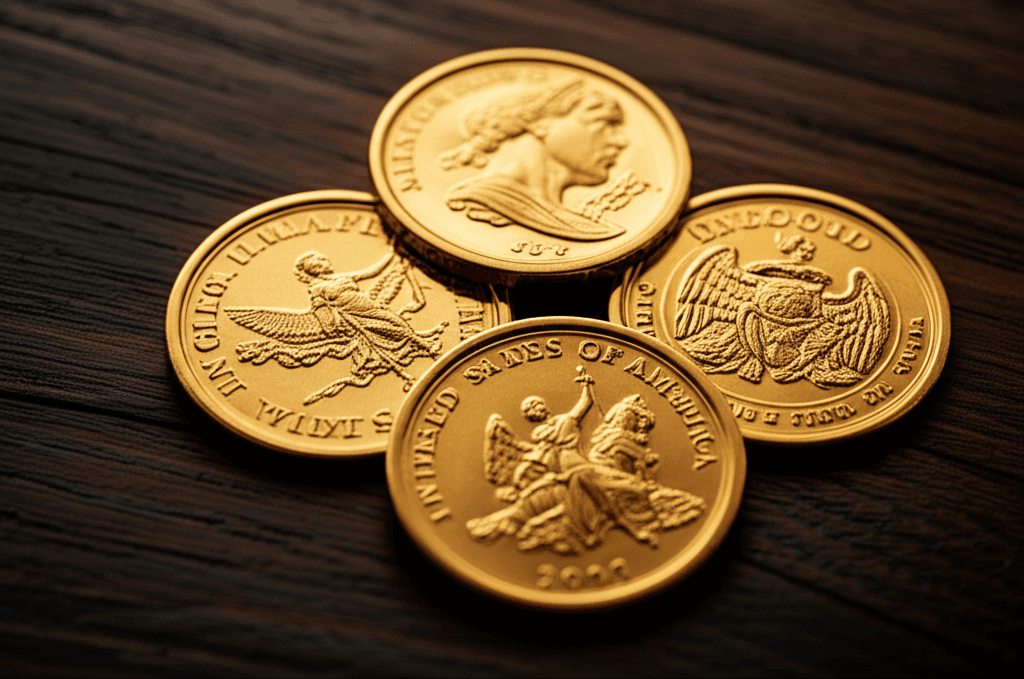
Uncovering the "Wow Factor" in Rare Coins: Scarcity and Eye
Expert numismatists reveal that the 'wow factor' in rare coins transcends grading metrics alone—encompassing historical narrative, aesthetic resonance, and emotional connection. Two identically-graded antique coins can command vastly different market prices based on intangible qualities. This insight reshapes how serious collectors and investors should evaluate numismatic purchases beyond technical specifications.
News Details and Background
The numismatic community has long grappled with a question that extends far beyond simple economics: what transforms an ordinary rare coin into an extraordinary treasure that commands attention and admiration? Recent discussions among expert collectors and professional numismatists on dedicated forums have revealed that the "wow factor"—that ineffable quality that captures the imagination of both seasoned collectors and newcomers alike—is far more complex than market value alone would suggest. This phenomenon transcends traditional metrics of rarity and grade, instead encompassing a multifaceted combination of elements that work in concert to create genuine emotional resonance.
The conversation has intensified as the numismatic market continues to evolve, with collectors increasingly seeking coins that offer not just investment potential but also an intangible sense of wonder and historical connection. Experts have noted that while two coins may share identical technical specifications, one might possess an undeniable magnetism that draws the eye and stirs the soul, while the other remains merely a statistical entry in a database. Understanding this distinction has become crucial for serious collectors who wish to build meaningful collections that transcend monetary considerations.
Historical Context
The concept of a coin's "wow factor" cannot be separated from the historical narratives these pieces embody. Coins that emerge from pivotal moments in human civilization—whether commemorating significant political transitions, technological achievements, or cultural watersheds—inherently carry a gravitational pull that resonates with collectors on a deeper level. A coin minted during a reign marked by extraordinary cultural flourishing or political upheaval possesses an immediacy of connection that mere age cannot replicate.
The historical significance amplifies exponentially when a coin intersects with the biography of legendary figures or events that shaped nations. Collectors report experiencing profound emotional responses when holding coins that circulated during the Napoleonic Wars, the American frontier expansion, or the Renaissance. These pieces serve as tangible conduits to distant eras, allowing modern observers to hold physical artifacts that once passed through the hands of historical actors themselves. The historical provenance becomes inseparable from the object's appeal, transforming it from mere metal into a temporal bridge.
Moreover, coins bearing the marks of historical catastrophe or survival possess their own haunting allure. Pieces that survived wars, natural disasters, or the ravages of time carry embedded narratives of resilience and continuity. A coin dug from volcanic ash in Pompeii or recovered from a shipwreck possesses contextual depth that elevates its significance immeasurably beyond coins of identical technical characteristics that lack such dramatic histories.
Numismatic Analysis
From a technical standpoint, professional numismatists identify several objective elements that contribute substantially to a coin's overall appeal, though subjective interpretation plays an equally important role. The strike quality—the sharpness and completeness of the design transfer from die to planchet—fundamentally affects visual impact. A coin exhibiting exceptional strike characteristics presents its design elements with clarity and vigor that catches the light dynamically and reveals the engraver's artistic intentions with perfect fidelity.
The patina and surface characteristics of a coin constitute another critical dimension of its aesthetic presentation. Rather than favoring uniformly polished surfaces, many connoisseurs appreciate coins that display original toning—the natural oxidation that develops over decades—which can produce colors ranging from subtle iridescence to dramatic jewel-like hues. Expert collectors recognize that authentic toning serves as documentary evidence of a coin's age and provenance while simultaneously enhancing visual richness. The interplay of light across tonally varied surfaces creates depth and dimensionality impossible to achieve on artificially cleaned examples.
Artistic merit represents perhaps the most subjective yet profound contributor to numismatic appeal. Coins designed by master engravers of the Renaissance, the Art Deco period, or modern sculptors may exhibit compositional brilliance, anatomical precision, or symbolic complexity that transcends utilitarian function. The visual harmony of proportions, the subtlety of relief modeling, and the integration of inscriptions into overall design create works worthy of aesthetic admiration independent of numismatic considerations.
Market Trends and Price Analysis
Contemporary market analysis reveals an interesting divergence between coins valued primarily for rarity and those commanding premium prices based on combined factors including condition, eye appeal, and historical narrative. While rare coins in lower grades maintain steady value based on scarcity alone, exceptionally appealing examples in superior condition frequently exceed standard market valuations by substantial percentages. Recent auction results demonstrate that collectors will pay significant premiums for coins that photograph well, tell compelling stories, and display exceptional eye appeal.
The market has increasingly recognized that condition is not merely a technical grade but rather a fundamental expression of visual presence.A coin with excellent eye appeal, including strong luster and strike, can command a much higher price than one with less impressive eye appeal. Dealers and serious collectors understand that the "wow factor" possesses real economic value, translating emotional appeal into demonstrable market premiums.
Notably, the demographics of successful auction results suggest younger collectors are driving increased demand for historically significant pieces with compelling narratives, sometimes preferring well-documented examples in moderate grades over technically superior pieces with mundane provenance. This shift indicates an evolving market philosophy where the story and historical context increasingly rival traditional grading metrics in determining value perception and collector enthusiasm.
Collector Significance
For individual collectors, the "wow factor" fundamentally determines satisfaction and long-term engagement with numismatics. Expert collectors consistently report that their most treasured acquisitions are not necessarily those representing their largest financial investments but rather those coins that evoke genuine emotional responses upon examination. The capacity of a single coin to inspire wonder, curiosity, and historical appreciation can sustain collecting enthusiasm across decades, whereas pieces acquired purely for investment value may feel hollow and impersonal.
The psychological dimension of coin collecting manifests clearly when collectors describe the experience of acquiring particularly appealing pieces. Many report experiencing almost tactile pleasure from holding coins with exceptional eye appeal, describing sensations of connection and presence that purely investment-grade acquisitions fail to provide. This emotional engagement transforms coin collecting from a financial activity into a genuine form of personal enrichment and intellectual stimulation.
Building a collection around the "wow factor" requires developing aesthetic sensibility and historical knowledge beyond simple price guides and rarity rankings. Collectors who understand design principles, historical contexts, and artistic traditions within numismatics can identify exceptional pieces that offer genuine satisfaction. This approach often yields superior long-term enjoyment and, paradoxically, frequently results in collections that appreciate more substantially than those built purely on rarity calculations.
Comparable Coins
Examining specific examples illuminates how the "wow factor" manifests across different numismatic categories. Similarly, certain date combinations in the Gobrecht dollar series command passionate collector devotion despite moderate populations, driven primarily by aesthetic excellence and historical importance.
In European numismatics, Renaissance medals and high-relief modern coins consistently generate collector enthusiasm that transcends traditional value metrics. Pieces bearing the signatures of legendary engravers like Antonio Pisanello or contemporary masters command respect for artistic innovation and technical mastery. These examples demonstrate that the "wow factor" frequently correlates with artistic ambition and design innovation rather than age or rarity.
Ancient coinage offers particularly compelling illustrations of the principle, as collectors frequently prize exceptional examples of artistically accomplished pieces from relatively short historical windows—such as the tetradrachms of Syracuse or coins from the reign of Augustus—over more common pieces from longer-lasting series. The concentration of artistic energy into limited production periods creates coins whose aesthetic excellence remains immediately apparent across two millennia of intervening time.
Authentication Considerations
The significance of authentication to preserving and recognizing the "wow factor" cannot be overstated, as counterfeit or artificially enhanced coins fundamentally compromise the emotional and historical authenticity that generates genuine appreciation. Expert numismatists emphasize that coins whose appeal rests on claimed historical provenance, original toning, or exceptional strike characteristics must be authenticated through reputable professional services capable of detecting artificial enhancement and detecting sophisticated forgeries.
The rise of professional grading services has contributed meaningfully to market confidence in the coins they certify, as their technical analysis and photographic documentation provide transparency regarding strike quality, surface characteristics, and overall eye appeal. However, expert collectors recognize that professional certification cannot replicate the sensory experience of direct examination, and many prefer hands-on evaluation of pieces before committing substantial financial resources. The authentication process extends beyond technical verification to encompass provenance research that documents a coin's ownership history and historical context.
Conservation practices profoundly affect a coin's ability to maintain its "wow factor" across generations. Appropriate handling, storage conditions, and protective encapsulation preserve original surface characteristics and prevent toning degradation that might diminish visual appeal. Collectors who understand that their coins are temporary stewards of historically significant objects approach preservation with appropriate seriousness, recognizing that their custodial responsibilities include maintaining the conditions that allow future collectors to experience the same sense of wonder.
Future Outlook
The numismatic market appears poised to increasingly recognize and value the intangible qualities that constitute the "wow factor," as educational resources and community discussions continue to refine collector sophistication. Emerging technologies including high-resolution imaging, detailed provenance databases, and specialized conservation techniques will enable collectors to appreciate and preserve coins with unprecedented precision and understanding. The democratization of numismatic knowledge through online forums and educational platforms empowers new collectors to develop aesthetic sensibility and historical awareness that positions them to identify truly exceptional pieces.
As collecting priorities continue evolving among generational cohorts, the emphasis on coins that combine rarity with historical significance and aesthetic excellence seems likely to strengthen. Rather than viewing investment potential and collecting satisfaction as competing objectives, sophisticated collectors increasingly recognize that coins possessing genuine "wow factor" frequently outperform pure rarity-based acquisitions across time horizons. This convergence of emotional and financial value suggests a maturing market where educated collectors and professional dealers alike prioritize quality of experience alongside quantifiable metrics.
The fundamental insight emerging from contemporary numismatic discourse is that coins transcend their utilitarian origins to become vehicles for historical connection, artistic appreciation, and personal enrichment. The "wow factor" represents nothing less than this transformative capacity—the ability to elevate a metal disc into an object worthy of genuine admiration and lifelong appreciation.
Related Articles
Weekly Market Intelligence
Weekly rare coin intelligence — auctions, price action, and analysis, delivered via LINE.
Free · Instant · Block anytime