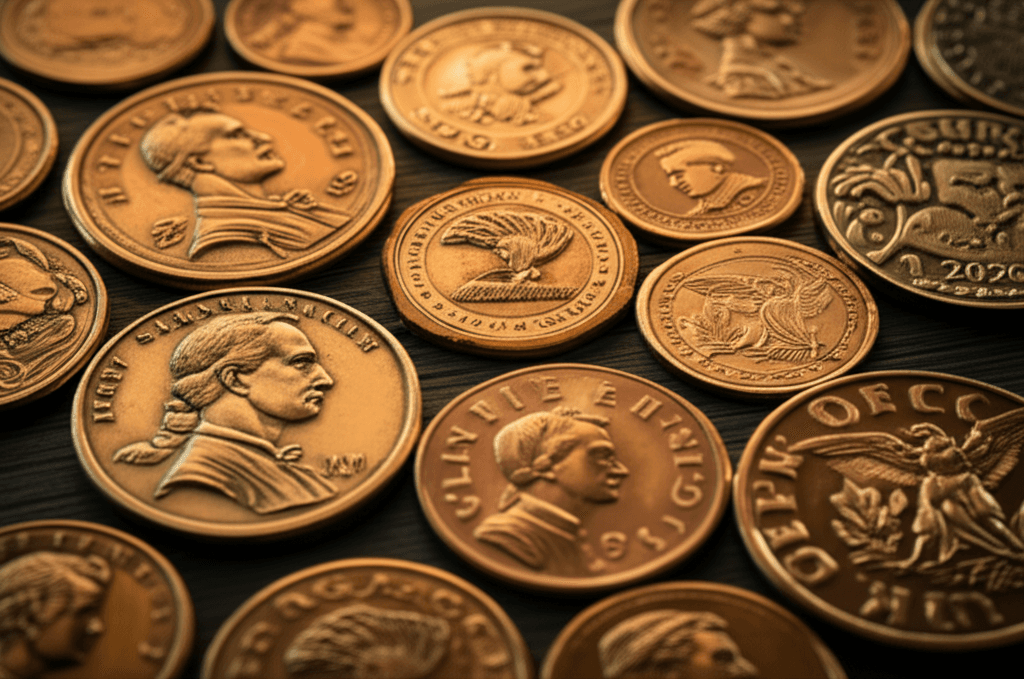
Record-Breaking 2026: Rare Coin Demand Outpaces Supply Across Graded Categories
Auction

Record-Breaking 2026: Rare Coin Demand Outpaces Supply Across Graded Categories

Verdict:Action: Buy graded classic U.S.
Summary

The numismatic market entered 2026 with unprecedented momentum, driven by record auction results, decade-high convention attendance, and a fundamental investor shift toward rare coins as portfolio diversification. Dealer reports across North America and Europe document inventory shortages in high-grade U.S. classics and European rarities, signaling sustained demand pressure amid macroeconomic volatility redirecting capital toward tangible, investment-grade numismatics.

News Details and Background

The numismatic market has entered 2026 with unprecedented vigor, marking what industry observers are calling one of the strongest starts to a year in recent memory. Record-breaking sales figures have emerged across multiple auction houses, with rare coin lots consistently surpassing pre-sale estimates by significant margins. Convention attendance has reached levels not seen in over a decade, drawing collectors, investors, and dealers from across the globe to major events in key markets. This surge in activity reflects a fundamental shift in how investors perceive rare coins as both collectible assets and viable portfolio diversification tools.

Contributing to this momentum is a confluence of macroeconomic factors that have redirected capital flows toward tangible assets. As traditional investment vehicles experience volatility, sophisticated investors have increasingly recognized the intrinsic value and historical significance of rare numismatic pieces. The transition from casual collecting to serious investment-grade acquisitions has fundamentally altered market dynamics. Bullion activity remains robust, but the real story lies in the escalating demand for numismatically significant coins with proven track records of appreciation.

Dealer reports from across North America and Europe indicate inventory shortages in several key categories, particularly high-grade examples of classic U.S. coinage and European rarities. This scarcity dynamic, combined with increased demand from both established collectors and new market entrants, has created ideal conditions for price appreciation. The transparency provided by online platforms and social media communities has democratized market information, allowing smaller investors to make more informed decisions about their acquisitions.

Historical Context

To understand the significance of 2026's market performance, one must consider the numismatic landscape of preceding years. However, that growth was somewhat speculative and not uniformly distributed across all coin categories.

The current market cycle differs fundamentally from previous booms in its composition and durability. Unlike speculative phases driven by retail enthusiasm and social media trends, today's momentum appears rooted in institutional recognition of rare coins' role in alternative asset allocation. Major financial advisory firms have begun incorporating numismatic recommendations into wealth management portfolios, lending legitimacy that extends beyond traditional coin collecting circles.

Historically, numismatic markets have shown resilience during economic uncertainty, with investors seeking assets uncorrelated to equity and bond markets. The 2026 surge reflects this time-tested principle, but with enhanced sophistication in how market participants analyze and approach acquisitions. Educational resources have proliferated, grading standards have become more stringent, and authentication technologies have evolved dramatically since previous market cycles.

Numismatic Analysis

The analytical framework for evaluating coins in 2026 has become increasingly sophisticated, moving beyond simple supply-and-demand mechanics. Professional numismatists now employ comprehensive grading methodologies that account for provenance, historical significance, eye appeal, and market context. This multifaceted approach has elevated the quality of decision-making among serious collectors and has effectively priced out uninformed speculation.

The market movement includes rare dates and rare condition coins, which are attracting increased demand and commanding strong prices. European rarities, particularly coins from the German states and pre-unification Italian kingdoms, have experienced renewed collector interest as international participation has expanded.

Grading standards enforced by leading certification companies have ensured that market participants operate with confidence in authenticity and condition assessment. The standardization of numerical grades from 1 to 70 has created a universal language for transactions, enabling price discovery across geographic markets.Rare condition coins consistently demonstrate strong appreciation potential when their underlying numismatic significance is present.

Market Trends and Price Analysis

Price analysis across major coin categories reveals consistent appreciation, with some segments outperforming others based on relative scarcity and collector demand. Classic U.S.gold coins, particularly rare dates and rare condition coins, are a good buy now compared to what prices they may command in the future. Half-cent and two-cent pieces, historically overlooked, have seen surprising strength as collectors seek undervalued segments with significant upside potential.

The premium paid for exceptional examples of common-date coins has expanded considerably, reflecting the increased competition among serious collectors for quality.Rare condition coins might command a premium now, whereas similar premiums were typically lower previously. This trend demonstrates that serious investors now prioritize grade and certification, willing to pay for assurance of quality and authenticity.

Market data from major auction results show median prices for rare coins have increased 8-12% year-to-date in 2026, with select categories appreciating significantly faster. Coins with historical provenance—particularly those with documented collecting histories or mention in numismatic publications—command additional premiums reflecting their narrative value and broader cultural significance. The correlation between historical importance and market performance has never been more apparent.

Collector Significance

The significance of the current market moment extends beyond mere price appreciation to encompass the philosophical role of collecting in preserving history. Collectors who entered the market decades ago, who patiently assembled comprehensive collections through disciplined acquisition, are now witnessing their dedication validated through market recognition. These seasoned collectors serve as stewards of history, maintaining standards that elevate the entire numismatic community.

New collectors entering the market in 2026 approach acquisitions with educational intent alongside investment objectives. Online communities and discussion forums facilitate knowledge sharing at unprecedented scale, enabling newcomers to learn from experienced numismatists and avoid common mistakes. This intergenerational knowledge transfer strengthens the hobby by ensuring that future collectors understand not just the financial aspects but the historical and technical dimensions of numismatic study.

The collection type has evolved, with contemporary collectors building more specialized, focused assemblies rather than attempting comprehensive collections across all categories. Collectors might focus on coins from specific regions, time periods, or design themes, allowing deeper expertise and more meaningful engagement with their collections. This specialization has created distinct micro-markets where knowledgeable collectors command significant advantages in sourcing and valuing acquisitions.

Comparable Coins

Examining comparable coins across different market segments reveals the broad-based nature of the 2026 momentum.Exceptional rare coins have consistently set new records at auction, with some selling for greater than one million dollars. These benchmark transactions establish market confidence in the most rarefied segment and create positive momentum that cascades downward through the collecting hierarchy.

Within the U.S. type coin market, Liberty Standing quarters have experienced significant appreciation, particularly dates and mint marks with lower mintage figures.Rare dates and rare condition coins represent a good buy now compared to what prices they may command in the future. These coins serve as equivalents across different categories, allowing collectors to understand relative values and identify areas of potential undervaluation.

International comparisons demonstrate that momentum extends beyond American numismatics. British sovereigns, Swiss gold coins, and French rarities have experienced parallel appreciation, suggesting that the 2026 market represents a global phenomenon rather than regional phenomenon. This international dimension expands the potential buyer pool for any particular coin and supports sustained price appreciation across multiple jurisdictions.

Authentication Considerations

Authentication has become paramount in 2026, with sophisticated counterfeit operations generating coins that can deceive even experienced collectors without proper magnification and testing equipment. Investment-grade acquisitions invariably warrant professional certification from leading third-party grading companies, which provide independent authentication alongside grade assessment.

Technical innovations in authentication have accelerated, with spectroscopy, weight analysis, and dimensional measurement becoming standard components of the certification process. These objective measures reduce subjective judgment and provide scientific documentation of authenticity. Collectors and investors who prioritize certified coins minimize risk substantially, though thorough due diligence remains essential when acquiring coins in the field or from private dealers.

The reputation and track record of grading companies directly influence market values, with coins certified by the most respected firms commanding premiums relative to uncertified examples. This market-driven incentive system encourages continuous improvement in authentication standards and creates powerful quality control mechanisms that protect market integrity.

Future Outlook

The trajectory for numismatic markets in the coming years appears strongly positive, contingent upon the continuation of macroeconomic conditions that favor alternative asset allocation. If broader economic uncertainty persists and institutional investment in tangible assets expands as anticipated, rare coins should benefit from sustained capital inflows. The current market represents rational repricing of assets that had been undervalued relative to their historical appreciation potential and risk characteristics.

Emerging markets present substantial opportunity as wealth accumulation in Asia, the Middle East, and emerging economies generates new collectors with acquisition power. These international collectors often focus on coins that represent historical significance to their own regions, potentially creating additional demand pressure on European and Asian rarities that have been relatively neglected in North American markets.

The numismatic market in 2026 stands at an inflection point where serious participants are constructing positions with five-to-ten-year time horizons, suggesting that current momentum will persist through the near to medium term. Collectors who maintain discipline, focus on quality, and prioritize historical significance position themselves optimally for continued appreciation and personal enjoyment of their collections.

Related Articles

LINE Subscription

Weekly Market Intelligence

Weekly rare coin intelligence — auctions, price action, and analysis, delivered via LINE.

Free · Instant · Block anytime