CoinTalk Members Say "PCGS" Holders on Coins Bought Online Are Fake, List Signs
In a CoinTalk forum thread, a member wrote that he told a friend that about 20 coins in "PCGS" holders the friend had bought on Etsy and eBay for no more than $50 each were all fake or stolen. Other members listed signs they said point to fake holders, such as a missing hologram and logo. The source does not give the post dates.
Correction (Oct 13, 2026): We rewrote the headline, summary and body to match the source, a CoinTalk forum thread. We removed unsupported material (rising rare coin prices, investment angles, grading services' countermeasures, general commentary in the English body, and a one-line conclusion calling for video checks on deals over a set amount). We also replaced a headline saying a surge in counterfeit slabs threatens trust in NGC and PCGS, and an English summary saying NGC slabs were being replicated, and made clear that the account comes from forum members' own posts and that the source does not give the post dates. The previous headline was "Counterfeit Slabs Surge Threatens NGC and PCGS Trust."
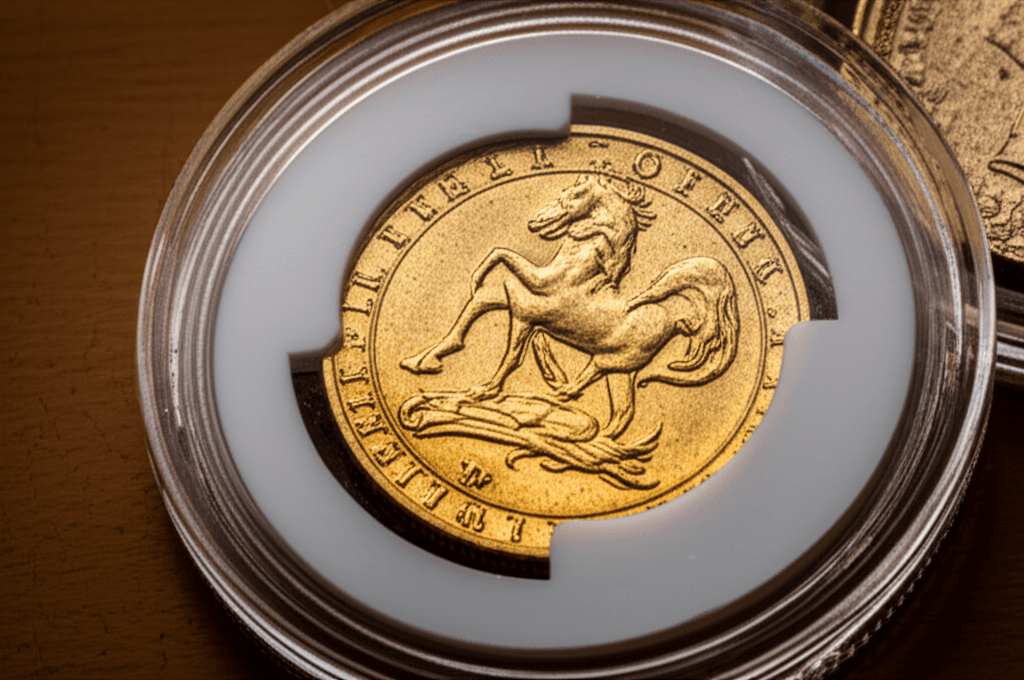
This article is based only on posts in the CoinTalk forum thread "More Fake Holders." The source does not give the post dates. What follows are members' own accounts and opinions, not findings confirmed by a grading service.
About 20 Coins Bought Online
A member, Dafydd, wrote that some time ago he advised a friend who is not a coin collector to buy "silver." He meant bullion.
The friend brought him around 20 coins he had bought from Etsy and eBay and asked for an opinion. According to Dafydd, all were in "PCGS" holders and were bought online from the USA. They included several Morgan dollars, mainly Carson City coins graded MS 63 and above.
None had cost the friend more than $50. Dafydd wrote that he told him they were all fake or stolen.
When he looked up the numbers on the holders, the "identical" coins came up. Dafydd could tell the difference, but his friend could not. He posted the PCGS verification page for what he called "one of these fake slabs" (cert 15199422).
"The Plastic Was the Guarantee"
Dafydd wrote that he would now never totally rely on a coin in a third-party grading (TPG) slab to be genuine, adding that "for many the plastic was the guarantee."
He also wrote that someone on another forum had pointed out fake Chinese websites claiming to be PCGS or another grading service that will "confirm" a fake coin.
Signs Members Pointed Out
Other members listed the following points about the holders and coins in the photos. These are their own observations.
- Barney McRae: Neither slab has a PCGS hologram. He has also seen coins with legitimate PCGS registration numbers that do not come close to matching the true views. - Burton Strauss III: The front of the slab is missing the embossed PCGS lettering, the font is incorrect, and the hologram is wrong. PCGS has a gold shield, not silver. He recommended PCGS's Holder Museum and the OldSlabHolders site. - Jack D. Young: The barcodes for the 1796 and 1800 coins are the same. He has seen these slabs with Morgans for a couple of years. There is no PCGS insignia in the lower right-hand corner, the labels are stuck on the outside of the holder, and the barcodes will not read. - mpcusa: The missing PCGS logo in the bottom right-hand corner is a clear giveaway. - Michael K: The coins have a pale gray, washed-out look, and the dentils and digits are incorrect. He saw the same coins for sale on Etsy, described as "restrikes," at an absurdly low price. - Tater: It was the cleanest-looking F15 he had ever seen, which should be a clue. - The Meat man: Always closely compare the TPG photos with the actual coin.
The Price of a 1796 Dollar
One of the coins shown was dated 1796. Collecting Nut wrote that it is at least a $4000-plus coin. Citing his outdated Red Book, he wrote that the 1796 Draped Bust silver dollar had a mintage of 79,920 and lists at $825 in AG-3, $3800 in F-12 (about what the photo shows) and $5500 in VF-20. Dafydd wrote that he had told his friend it was a $5000 coin if real.
Views on the Grading Services
Burton Strauss III wrote that there are plenty of ways the TPGs could improve the security of their product, and that PCGS could have been taking photos and posting them all along, as NGC does. He also wrote that PCGS's NFC chip is more secure than NGC's enhanced QR code for in-hand validation.
Dafydd wrote: "Authority is no substitute for authenticity."
Source: CoinTalk, "More Fake Holders." (forum thread; post dates not given in the source).
Read next
Weekly Market Intelligence
Weekly rare coin intelligence — auctions, price action, and analysis, delivered via LINE.
Free · Instant · Block anytime