Market
More Than a Novelty: The Numismatic Value of Dad's Root Beer Tokens
Verdict:Action: Buy Dad's Root Beer collectible items.
Dad's Root Beer has a surprising connection to numismatics, and this article explores the history and value of its collectible promotional tokens.
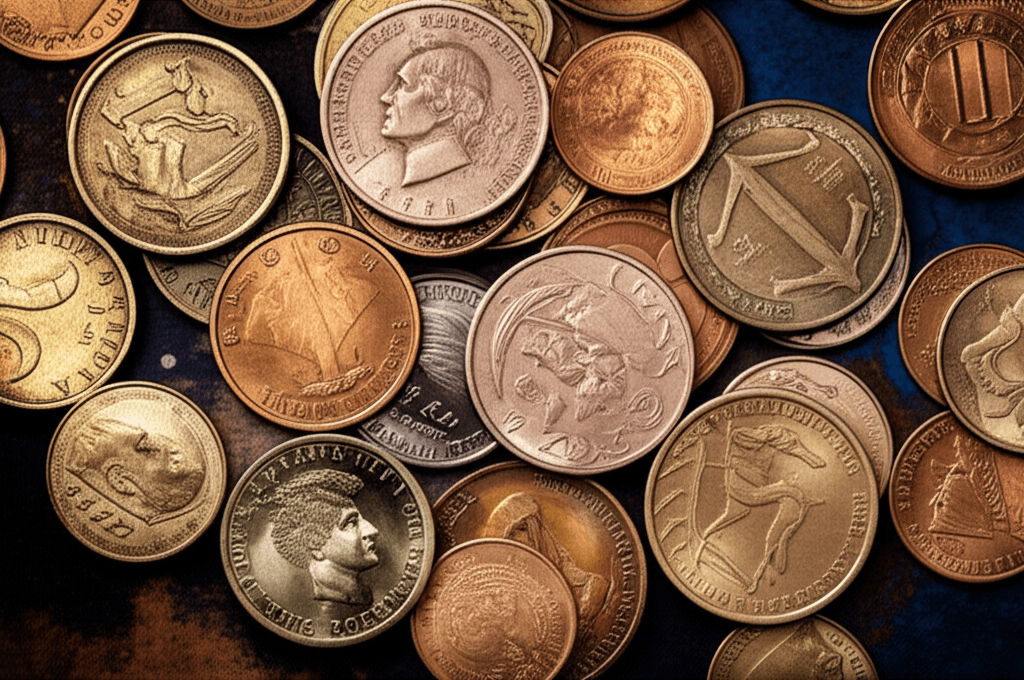
From Giveaway to Historical Artifact: A Re-evaluation of Dad's Root Beer's Promotional Items The beverage brand Dad's Root Beer is generating buzz among collectors. Since its founding in 1937, the company has been known as a symbol of American commercial culture. Now, the promotional tokens and medals issued throughout its history are gaining new attention. These items were originally distributed as novelties for advertising purposes. Today, however, they are viewed in a completely different light. Numismatists and historical researchers do not see them as mere giveaways. Instead, they regard them as valuable historical artifacts that document how business was conducted and how consumers behaved in 20th-century America. As a result, these former promotional items are now recognized by the community as valuable collectibles. ## A Latecomer Brand's Strategy: How the Name 'Dad's' Captured Families' Hearts in 1937 Dad's Root Beer was born in 1937, a time when the American beverage manufacturing industry was experiencing significant growth. This era coincided with the nation's recovery from the Great Depression, a period of vigorous commercial activity when many food and beverage companies were launching new ventures. In the root beer market, Dad's was a latecomer. Nevertheless, through its unique marketing strategy and product quality, it gained widespread acceptance among consumers. One of its key strategies was its brand name. The friendly name "Dad's" was intended to appeal to the family demographic. This naming proved successful, and the drink came to be recognized as a staple at the family dinner table and at gatherings. ## Advertising Strategies: Dad's Adopts a Clever Promotional Idea During this period, American commercial advertising was undergoing a major transformation, driven by the economic prosperity that followed World War II. Companies began to devise new and different ways to persuade consumers to choose their products. One effective method was distributing tokens and medals as promotional items. Many brands adopted this approach, and Dad's Root Beer was no exception. The company also embraced this strategy ## Made of Aluminum and Zinc Alloy: Inscriptions Around the Logo Reveal Dates and Campaigns Dad's Root Beer issued a variety of promotional tokens. They were made of metal, typically aluminum or zinc alloy, and were commonly between 1 and 1. 5 inches in diameter. Designs changed with the times. Early tokens featured a simple design with the company logo. As time went on, they evolved into more complex pieces with finer engravings. On many tokens, the brand's logo or mascot is placed in the center, characteristically surrounded by various letters and symbols. From these inscribed letters, one can decipher the year of issue or the theme of a specific campaign. Some tokens even include information indicating the region where they were distributed. The reverse side often contains information as well, such as the manufacturer's name or the token's purpose. These inscriptions are referenced as source material in numismatic research. ## Why the Different Designs? The Medals Distributed in Texas and Their Local Symbols A discussion has arisen in the community about the promotional medals once issued by Dad's Root Beer. A point of interest is that the designs varied by region across the United States. For example, medals distributed in Texas featured state symbols and local landmarks. On the other hand, for medals from California, the There is online interest in the techniques used to create Dad's Root Beer tokens. This period saw advancements in metalworking technology, and the quality of the tokens improved in stages accordingly. Early examples were made with relatively simple stamping, but over time, they came to feature more precise engravings and complex designs. The metals used also tell a story of the era. Many tokens were made from an aluminum or zinc alloy, a choice made to keep costs down while ensuring adequate durability. Indeed, when properly stored, they can remain in their original condition even after several decades. The manufacturer's name inscribed on the tokens is another point of interest. This marking is an important clue for understanding the commercial networks that companies had established at the time. ## The Power of Physical Objects to Inspire Collecting The promotional campaigns run by Dad's Root Beer evolved over time. Campaigns were relatively simple. The primary goal was to establish brand name recognition. The company introduced interactive elements designed to encourage consumer participation and collecting. During this period, Dad's Root Beer issued medal series with various themes—a strategy aimed at stimulating people's desire to collect. However, these physical tokens and medals have retained their value even in the digital age. This is because they are physical objects that represent a direct connection between the company and the consumer. As tangible evidence that remains in one's hands, they are thought to have acquired a special meaning that transcends time. ## The Value of Novelties: How Such Items Are Traded The changing value of the promotional tokens once distributed by Dad's Root Beer has become a topic of discussion. Initially, these tokens and medals were treated as disposable novelties. Gradually, however, collectors began to see them as more than just promotional items. Attention is drawn to the historical and cultural aspects of the tokens. This appears to have sparked the formation of communities of specialized collectors. The spread of the internet fueled this movement. Information about which tokens were rare became widely shared among collectors, and reports emerged of some items rapidly increasing in market value. Today, it is not uncommon for certain pieces to trade at high prices, especially those in excellent condition, limited editions with low production numbers, or error pieces resulting from manufacturing mistakes. Some are said to reach values from several hundred to several thousand dollars. This shift in value is seen by some as an indication that the collectibles market is increasingly prioritizing the historical narrative of an item, not just its monetary worth. ## Two Factors That Determine Value: Why Grading by PCGS and NGC Influences Price What determines the value of a Dad's Root Beer token has become a popular topic. Among collectors, two factors are primary: rarity and condition. Rarity refers to how difficult an item is to obtain. Some tokens were distributed only in specific regions or were issued for very short periods. These circumstances limit the number available on the market, creating scarcity value. The other factor is condition. Even for a token that was produced in large quantities, very few survive the long years since their issue in perfect, undamaged condition. For this reason, a piece in like-new condition is valued more highly than a worn one. Specialized grading services provide an objective assessment of this condition. Third-party services like PCGS and NGC authenticate tokens and assign them a numerical grade. This grade serves as a direct basis for determining market price. Consequently, the value of the same token can vary greatly depending on its certified grade. For example, it is not unusual for there to be a significant price difference between a piece graded as "Mint State," meaning it is in the same condition as when it left the factory, and one that is heavily worn. ## Why 'Primary Sources'? Deciphering 20th-Century Commercial History from Token Inscriptions Promotional tokens from Dad's Root Beer are attracting interest among collectors. They are considered not just promotional items but also valuable "primary sources" that tell a story of the past, a distinction made in the field of numismatics. The inscriptions, dates, and designs on these tokens each serve as a unique source of information for unlocking the commercial and advertising history of 20th-century America. For example, the discovery of a medal distributed exclusively in a certain region can serve as concrete evidence of when and on what scale Dad's Root Beer was conducting sales activities in that area. Furthermore, by tracing the evolution of token designs, one can see reflections of the changing aesthetic tastes and consumer preferences of each era. Researchers use these small metal pieces to deduce what customer demographics the manufacturer was targeting at the time. They offer clues to understanding the atmosphere of the past—what visuals and symbols were thought to resonate with people. ## Pre-Television Marketing: The Threefold Aim of a Single Token for Retailers In the mid-20th century, many small and medium-sized businesses in America devised various strategies to build relationships with their customers. One such method was the use of promotional tokens issued by companies like Dad's Root Beer. At the time, television and radio advertising were not yet commonplace. This limited the ways in which companies could connect directly with consumers. Tangible items like tokens, which could be handed over in person, were a valuable point of contact that made the company feel more accessible to the customer. Distributing these tokens served multiple purposes. The first was to encourage purchases at retail stores. The second was to foster repeat business and turn customers into so-called fans. And the third was to spread awareness of the brand name. A single token was intended to achieve all these objectives simultaneously. From a modern marketing perspective, these activities are considered a historical example of how the retail industry creatively sought to build customer relationships. ## What to Collect After Official Coins: The Establishment of 'American Commercial Tokens' as a Specialty Promotional tokens from Dad's Root Beer appear to be establishing themselves as a standard collecting category among numismatists. For many collectors, the entry point is official government-issued coins, such as U. S. dollars and cents. As they broaden their collecting scope, they tend to move toward more specialized items like tokens and medals. Dad's Root Beer items have become a popular category that piques the interest of these collectors. Specifically, when organizing their holdings, collectors sometimes create their own specialized fields, such as "American Commercial Tokens" or "20th-Century Promotional Medals," and add Dad's-related pieces to these classifications. This trend shows that what were once mere promotional items are now being treated as legitimate collectibles within the numismatic community. The very act of collectors creating their own classification systems is seen as proof that their value has been recognized. ## How the Internet Changed Collecting: Forums Accelerate the 'Discovery' of Rare Items A topic emerging among collectors is how the internet has significantly changed the hobby of collecting Dad's Root Beer tokens. The entire process—from discovering items to researching and trading them—is now fundamentally different. Specifically, the proliferation of online auction sites and databases has been a major factor. These tools allow anyone to check the market price and past transaction history of a specific item in real time. Online communities, such as forums, are also active. Collectors connect directly, exchanging knowledge and photos of items they own. Detailed provenance and characteristics of individual tokens are being aggregated in these spaces. As a result of this accelerated information sharing, the "discovery" of previously unknown rare items has increased. It has also led to movements that protect collectors, such as sharing methods for distinguishing forgeries and reproductions. This overall trend of digitization seems to be a contributing factor in making the historical and cultural value of Dad's Root Beer items known to a wider audience. ## Value Born from Post-War Prosperity: When Tokens Became Symbols of Affluence Why have Dad's Root Beer's promotional tokens become such popular collectibles? During this era, America recovered from the Great Depression and entered a period of post-World War II economic prosperity. As a result, the lives of ordinary people became more affluent, and they had more disposable income. As purchasing power increased, consumers became more discerning. People began to show a strong interest not just in acquiring goods, but also in their quality and aesthetic design. In this climate, the role of tokens and medals distributed by companies began to change. They were no longer just tools for advertising and promotion. Instead, possessing them started to function as a sort of symbol, attesting to the owner's economic prosperity and social standing. Eventually, the act of collecting itself came to be seen as a status symbol. Collecting tokens from a widely known brand like Dad's Root Beer, in particular, was considered a sign of good taste and a stable lifestyle. ## Why You Shouldn't Clean Them: Protecting the 'Toning' with Acid-Free Cases A consensus is forming within the numismatic community on how to preserve and display Dad's Root Beer promotional tokens. It seems they are no longer viewed as mere promotional items but as objects that require specialized knowledge and care. Specifically, consideration for the storage environment is paramount. Collectors are meticulous about preventing acidic materials from coming into contact with their items. Temperature and humidity control are also crucial. For storage, they use slab cases or special coin holders made from acid-free materials. There is also a clear policy regarding the treatment of the token's surface. Forcibly cleaning or polishing is considered detrimental to its value. The shared best practice for preserving long-term value is to maintain the natural oxidation (toning) that develops over the years. Display methods have also become sophisticated. Many collectors have invested in special display cases and lighting systems to protect their items from UV degradation and accidental physical damage. Such careful handling demonstrates that these tokens are recognized as historical artifacts. ## Also in the Smithsonian's Collection: How Promotional Items Became 'Heritage of Commercial Culture' It has been noted that promotional tokens and medals from Dad's Root Beer are beginning to be acquired by American history museums and art institutions. They are displayed as part of collections that convey the commercial culture of 20th-century America. Examples include the Smithsonian Institution and museums specializing in American business history. Museum ## Beyond Numismatics: Why Dad's Tokens Are Studied in University Seminars Promotional tokens from Dad's Root Beer are apparently gaining attention beyond the world of numismatics. They have become subjects of research in various fields, including commercial history, sociology, design history, and even consumer studies. These tokens are not mere souvenirs. Researchers attempt to read the social and economic changes of 20th-century America from them. They serve as valuable clues for understanding how business practices evolved and how visual culture, including design, developed during that time. There is indeed movement in academia. Seminars and workshops hosted by history departments and museum studies programs sometimes focus on American commercial tokens. In such settings, items from Dad's Root Beer are frequently used as specific case studies. This may indicate that Dad's tokens are not only of interest to the collector market but are also beginning to be widely recognized for their value as objects of academic research and education. ## From Collection to Investment: How Supply and Demand Drive the Value of Limited-Edition Tokens The value of the tokens and medals distributed by Dad's Root Beer for promotional purposes has been rising for the past several decades. In response to this trend, some collectors and investors have begun to view these items not just as collectibles but as long-term investments. Of course, not all items appreciate in value at the same rate. Prices are ultimately determined by the balance between the number of people who want an item (demand) and the number available on the market (supply). For example, limited-edition medals or tokens distributed only in specific regions tend to increase in value due to their scarcity. On the other hand, the value of items that were distributed in large quantities often rises more slowly. For this reason, it is pointed out that several skills are essential to profit from them as investments: the ability to identify which items are likely to become popular, the capacity to accurately assess an item's true rarity, and a keen eye for spotting fakes. Some opinions suggest that the spread of this investment perspective indicates that the commercial aspects of the numismatic market and the academic value of the items are not necessarily in conflict. ## A Story Beginning with a 1937 Founding: How Promotional Items Became Valuable Collectibles Since its founding in 1937, Dad's Root Beer has issued a range of tokens and medals for promotional purposes. These items have transcended their role as mere prizes to become treated as valuable collectibles. ## What the Tokens Reveal: Advertising Strategies and Consumer Psychology of 20th-Century America These tokens are regarded as precious historical materials that convey the commercial culture of 20th-century America. By analyzing their designs and inscriptions, one can understand the corporate advertising strategies and manufacturing technologies of the time. They also make it possible to decipher consumer psychology—what people were interested in—and even the values of society as a whole. Because of this, their value is recognized not only by individual numismatists but also by academic researchers and public institutions like museums, which treat them as objects for preservation and study. ## From Promotional Item to Cultural Artifact: The Future Viewed from Two Angles—Market Value and Academic Recognition Not only is their market value rising, but their academic standing is also growing. The convergence of these two trends has established a unique position for Dad's tokens in the field of numismatics. In recent years, the internet has facilitated a lively exchange of information, making it easier for collectors worldwide to participate in the market. This trend is likely to continue to broaden interest in the tokens. The process by which a corporate promotional "object" transforms over time into a cultural artifact with "historical value" will itself continue to be a fascinating theme for numismatic study.
Related Articles
LINE Subscription
Weekly Market Intelligence
Weekly rare coin intelligence — auctions, price action, and analysis, delivered via LINE.
Free · Instant · Block anytime