Market
NGC Grading: Coin Color Drives 30-50% Price Difference
Verdict:Conclusion: The debated origin of a golden hue on antique coins, whether from natural toning
Is the golden color on ancient coins a result of impurities or natural toning? The difficulty of authentication has become a prominent topic of discussion.
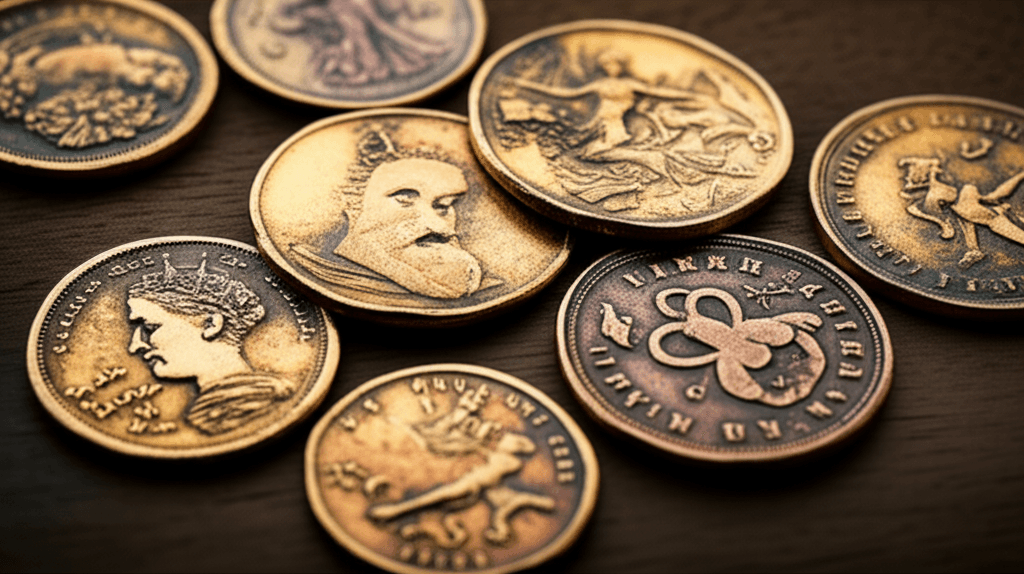
Is the Golden Color Natural Toning or Inherent Gold? Two Theories That Determine Value For years, a debate has raged among collectors and experts on how to interpret the coloration of coins. Of particular interest is the unique golden hue seen on ancient coins that have been in storage for long periods. There are two main perspectives on the origin of this golden color. The first is that it is a natural change that appears on the coin's surface over time, a result of patina or the tarnishing of silver. The second theory posits that gold impurities, originally present in the coin's metallic composition, are revealing their natural color. This difference in interpretation is not merely a matter of aesthetic preference. It has significant implications for establishing a coin's historical authenticity and determining its market value. The reality is that a coin's valuation can change dramatically depending on which of these two reasons is believed to cause its golden appearance. ## How Hydrogen Sulfide in the Air Tarnishes Silver Coins: The Chemical Mechanism of Toning Why does a coin's color change over time? Behind this phenomenon are multiple chemical and physical factors. The most well-known are oxidation and corrosion on the metal's surface. Taking silver coins as an example, they react with hydrogen sulfide in the air to form a black layer of silver sulfide on the surface. This is the cause of tarnishing. The story is more complex for coins made of gold-bearing alloys. From ancient to medieval times, gold coins were not pure gold but alloys with other metals. Even high-denomination currency like the Roman Empire's Aureus and Solidus had gold purities that varied by era and mint. As these coins aged over hundreds or thousands of years, their coloration has been influenced by a diverse range of factors. ## Alloy Color or Surface Patina? How Chemical Changes in Soil Complicate Identification A coin's color is determined by the composition of its alloy. The amount of other metals mixed with gold, particularly silver and copper, dictates its hue. For example, electrum, an alloy of gold and silver, appears more silvery-white as the silver content increases. Conversely, a higher proportion of copper gives a coin a reddish tint. Each ancient mint used its own unique alloy ratios. Taking the Roman Aureus as an example, we know that its gold purity changed over time. This information is useful in determining a coin's period of manufacture. The problem, however, is the film that forms on a coin's surface during long-term storage. Coins that were buried in the earth, for instance, may have undergone chemical changes on their surface that obscure the original color of the metal. This has led to a debate over whether an observed hue is due to the original alloy or a surface patina that formed later, as the two can be difficult to distinguish. ## The Golden Hue on Silver Coins: A Theory of How Copper Oxides Alter Light Reflection The verdigris seen on coins containing copper is not just a stain; it is the result of a complex chemical reaction. In the initial stage, copper on the coin's surface oxidizes, forming a thin layer of black copper oxide. It then reacts further with moisture and carbon dioxide in the air to form a more complex compound called basic copper carbonate. This is the source of the characteristic green color we see. This entire process can take decades or centuries, and its progression varies greatly depending on the storage environment. What is particularly interesting is the golden sheen sometimes observed on silver coins. This may also be related to copper oxides. In alloys with a high copper content, the copper on the surface can be selectively oxidized and concentrated. One theory suggests that this oxide layer alters the reflection of light, creating a special hue that looks like gold. In other words, this shine may not be from real gold but is merely an optical property of the oxide layer that has formed on the surface. ## Salt from Underwater Ruins Causes Severe Corrosion: The Profound Impact of Burial Environment The toning of ancient coins is greatly affected by their long-term burial environment, a topic of ongoing discussion within the community. For example, the type of corrosion products that form on a coin will differ depending on whether the soil is acidic or alkaline. Similarly, the processes of oxidation and corrosion proceed very differently in moist versus dry environments. In the case of coins recovered from underwater ruins, corrosion in the salt-rich environment is particularly severe and can lead to the formation of corrosion products with complex crystalline structures. ## Coins from the Same Hoard Can Have Different Toning: The Danger of Judging Authenticity by Color Alone Furthermore, it has been pointed out that even within the same burial environment, localized variations in toning can occur depending on how the coin's surface was in contact with the surrounding soil. Therefore, even among multiple coins found in the same hoard, their state of preservation and the development of their toning can vary significantly. This fact suggests the danger of judging authenticity based on toning alone. ## A Key to Solving the Toning Mystery: The Advent of Non-Destructive Scientific Analysis In recent years, scientific analysis techniques for examining the toning of ancient coins have advanced significantly, becoming a major topic of conversation. ## XRF for Alloy Ratios, TEM for Corrosion Dating: What Scientific Analysis Can Reveal X-ray Fluorescence (XRF) is a non-destructive method used to determine the elemental composition of a coin. It can analyze to a depth of several tens of micrometers, allowing researchers to distinguish between the coin's original alloy ratio and its surface oxide layer. Transmission Electron Microscopy (TEM) allows for detailed observation of the crystalline structure of materials formed by corrosion. This has led to more precise estimations of the age of the corrosion's formation. By combining a Scanning Electron Microscope (SEM) with Energy-Dispersive X-ray Spectroscopy (EDS), it is also possible to track in detail the changes in elemental concentration from the surface to the interior. ## Science Does Not Give the Final Answer: Why Expert Experience Is Needed to Interpret Data However, these scientific methods alone do not provide a completely definitive answer. Correctly interpreting what the analytical results indicate requires archaeological knowledge and expert experience. It is crucial to integrate scientific data with the judgment of specialists. ## Why Appraisers Disagree: The Challenge of Subjectivity in Experience-Based Evaluation In the authentication of ancient coins, the expert's eye still plays a vital role. Appraisers with decades of experience can discern whether a coin is genuine and from what period it dates. Their judgment is based on a wide range of factors: subtle differences in hue, the way a patina has formed, and traces of wear and corrosion left on the surface. The ability to comprehensively interpret these features is a skill acquired only through years of experience. This kind of assessment contains information that cannot be captured by scientific analysis alone. However, since it is an evaluation by the human eye, the intrusion of an appraiser's subjectivity is unavoidable. In fact, it is not uncommon for experts to have completely opposing opinions regarding the toning of the very same coin. For this reason, how to balance traditional, experience-based authentication with objective scientific analysis has become a key point of discussion. ## Chemically Induced Patinas: Sophisticated Forgery and the Need for Multi-faceted Authentication A debate has arisen that authenticity of ancient coins should not be judged by toning alone. While coloration is certainly an important factor, there is a growing sentiment that using it as the sole criterion has its limits. One reason cited for this is the advancement in forgery techniques. It is said that some sophisticated modern forgeries use chemicals to artificially create a patina, reproducing a color that is difficult to distinguish from the real thing. Therefore, the consensus is that for reliable authentication, it is necessary to look at multiple features beyond toning. These include, for example, marks from the striking process, the distribution of metal hardness, the internal structure, and elemental composition. It is believed that a high degree of certainty in authentication cannot be achieved without combining these multiple criteria. ## Collector Aesthetics Drive Prices: Market Valuations Are Not Always Scientific The value of an ancient coin can be significantly influenced by its coloration. Especially in the high-end market, visual appeal, not just preservation state, tends to be directly reflected in the price. A coin with a vibrant golden hue is often valued more highly than one with a darker tone. However, it has been noted that such market valuations do not necessarily reflect the scientific condition of the coin. This is because collector aesthetics and speculation about future price appreciation can be prioritized over facts, such as the cause of the coloration. There have been reports of coins whose colors were altered by human hands being traded at high prices, sparking debates about market integrity. ## Artificial Patinas Have Different Crystalline Structures: Using SEM to Detect Fraudulent Toning Techniques for artificially altering the color of coins have become a topic of discussion. A particular problem is the practice of making dark-toned ancient coins appear to be a more valuable golden color. Various methods are employed, including the use of chemicals, electrical treatments, and surface polishing followed by recoating. When done by an expert, these alterations can be so skillful that they are difficult to detect with the naked eye. Scientific analysis has been proposed as a means to uncover such fraud. X-ray Fluorescence can be used to check for unnatural differences in the elemental composition between the coin's surface and its interior. In addition, a Scanning Electron Microscope is sometimes used for magnified observation of the surface, as the crystalline structure of a naturally formed patina differs from that of an artificially created discoloration layer. ## Western 'Historical Authenticity' vs. East Asian 'Aesthetic Value': Cultural Differences in Appreciating Patina The standards for evaluating the toning of ancient coins vary significantly by region and culture, a point of recent discussion. Among Western collectors, for example, a naturally occurring patina is often treated as a sign of value. This is not simply a matter of preference. It is rooted in a conservation philosophy that prizes historical authenticity and advocates for minimal intervention on the coin's surface. In short, preserving the coin in its original, untouched state is highly valued. In contrast, a different perspective prevails in East Asian markets. There, a brighter, cleaner appearance tends to be favored. As a result, coins that have had their surfaces cleaned may be valued more highly. It is explained that this tradition has placed more emphasis on enhancing aesthetic value and "reviving" old coins. ## Why Newer Coins Can Look Older: The Environmental Trap in Age Estimation The coloration of an ancient coin can serve as a reference for its age. However, one cannot determine the period based on color alone, because the rate of color change is heavily dependent on the environment in which the coin was kept. For example, the speed at which oxidation and corrosion proceed can differ by a factor of several times between dry soil and moist soil. Therefore, even if coins were buried for the same length of time, the progression of their coloration will be completely different if their environments varied. Furthermore, it is even possible for a coin buried more recently to appear older than one that was buried for a longer period. A coin left in acidic soil for a few decades could appear more corroded than a coin stored in a dry environment for several centuries. Consequently, caution is required when using coloration to consider age. Information about the coin's environment, combination with other estimation methods, and statistical analysis are necessary. ## Does Cleaning Destroy Historical Information? The Ethical Debate Over Coin Conservation Conservation treatments applied to a coin have a major impact on its coloration. Cleaning with chemicals, applying anti-corrosion treatments, or finishing to improve appearance can permanently alter a coin's color. This has given rise to an ethical dilemma about the appropriate level of intervention. Proper treatment can halt a coin's deterioration and preserve its condition for future study. However, excessive treatment carries the risk of damaging the coin's historical record and material information. The principle of "minimal intervention" exists as an international standard. In practice, however, difficult decisions must constantly be made, balancing the coin's degree of deterioration, its cultural value, and market demand. ## Bridging the Human Eye and Machine Data: The Effort to Build Toning Databases How to evaluate a coin's color is a popular topic in the numismatic community. This evaluation has two aspects. One is the subjective judgment of beauty by the human eye. The other is objective measurement using instruments like a colorimeter. A machine will produce the same numerical value regardless of who performs the measurement. However, interpreting what that number means requires the experience of an expert with historical knowledge. Recently, a movement has emerged to address this challenge. Databases are being built to collect toning data for coins of specific periods and mints. By gathering data from many coins, a statistical picture emerges of the typical color range for that type of coin. An individual coin can be measured and its results compared against the database. This is enabling evaluation based on data, not just personal preference. ## Real Gold or Optical Effect? Using Ultraviolet Light to Differentiate The fact that the golden shine seen on the surface of ancient coins is not necessarily caused by gold has become a topic of discussion. This luster is a phenomenon produced by the reflection of light. It is a complex combination of the micro-topography of the coin's surface, the thickness of the oxide layer, the refractive index of light, and the effects of light interference. As a result, light of a specific wavelength is strongly reflected, making it appear golden to our eyes. This phenomenon is said to be particularly common in copper-bearing alloys. The layer of copper oxide formed on the surface can be indistinguishable from real gold under sunlight or incandescent light. However, this is merely an optical effect caused by the copper oxides. For this reason, ultraviolet light is sometimes used to check for changes in coloration. If the color changes depending on the light source, this becomes a useful piece of information in the authentication process. ## Why Appraisals of the Same Coin Diverge: The International Movement Toward a Unified Standard The lack of consistency in authentication standards for coin toning among different organizations has become a talking point for collectors. Currently, major auction houses and museums classify coin coloration according to their own internal standards. However, these standards are not unified. As a result, it is not uncommon for a single coin to receive completely different evaluations depending on the authenticating body. To eliminate these discrepancies, the International Numismatic Congress is taking action. A committee has been established within the Congress to develop a universal, unified standard based on scientific data and the practical experience of authenticators. If this international effort succeeds, it is expected to enhance market transparency and increase the reliability of transactions. ## The Rise of AI Authentication and Its Limits: How Lighting Conditions Can Skew Results New technologies are beginning to be used in the authentication of coin toning, creating a buzz in the community. Examples include digital image analysis, artificial intelligence (AI), and hyperspectral imaging. These technologies can detect minute color differences that are indistinguishable to the human eye and can also record these differences as numerical data. On the other hand, it has been pointed out that these technologies have limitations. A coin's coloration is heavily influenced by the lighting during photography and the camera's sensor performance. Therefore, standardizing shooting conditions is essential to ensure that the same data can be obtained regardless of who performs the measurement. Furthermore, the numerical values detected by a machine do not always align with the impression perceived by the human eye. It is believed that expert judgment will continue to be crucial in the final interpretation of these numbers. ## Beyond Color: A Comprehensive Approach to Authentication Using Strike and Wear An opinion being exchanged in the community is that coin authentication should not be based on toning alone. The idea is to integrate multiple independent perspectives rather than relying on a single criterion. Specific points to examine include the metal's elemental composition and the surface condition as observed under a microscope. Traces from the striking process and natural wear appropriate for the era are also important clues. The evaluation should be based on the overall state of preservation, including all these elements. Relying on a single analysis can lead to a subjective assessment. However, the argument is that by combining multiple perspectives, their respective ambiguities can be compensated for, leading to a more reliable conclusion. ## The Demands of Growing International Trade: A Need for Transparent and Reliable Global Standards The evaluation of ancient coin toning is not just a matter of academic interest. It is also a highly economic issue, as authentication results are directly linked to a coin's market value. Inaccurate authentication or intentional misrepresentation can cause direct financial harm to market participants. Furthermore, the value placed on toning also differs between cultural spheres. This point is also a subject of debate. With the growth of international trade, there is a rising call for an evaluation standard that is both reliable and transparent, which is seen as essential for the healthy functioning of the market. ## Impurity or Patina? Answering the Question Requires an Integration of Science and Experience The unique hue seen on gold coins: does it originate from impurities inherent in the gold, or is it due to a natural patina that has formed on the surface? Discerning this has been a long-standing and difficult problem in the world of numismatics. In recent times, scientific analysis techniques have advanced, making it possible to obtain objective data about coloration. However, not everything can be judged by machine analysis alone. It is difficult to fully scientize the evaluation, and the judgment honed by experts through years of experience still plays a crucial role. The challenge ahead is how to connect scientific data with the experiential knowledge of experts. There will also be a demand to create internationally accepted evaluation standards and to make the basis for authentication more transparent. If the reliability of authentication is enhanced through these efforts, it should bring positive results for everyone involved with coins. What is needed now is an understanding of the complexity behind the seemingly simple characteristic of "color. "
Related Articles
LINE Subscription
Weekly Market Intelligence
Weekly rare coin intelligence — auctions, price action, and analysis, delivered via LINE.
Free · Instant · Block anytime