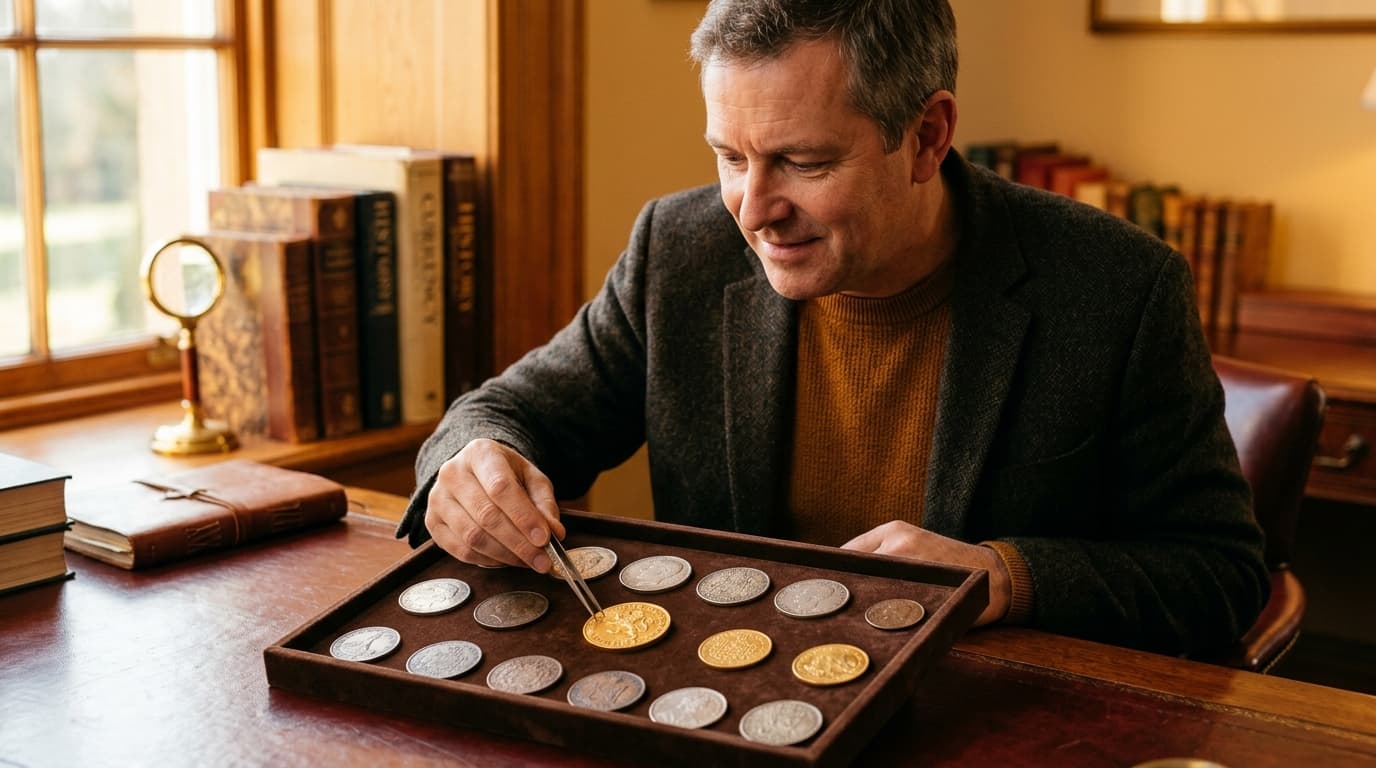
World Coins Time Machine Game Transforms Collector Dynamics
The 'World Coins Time Machine' gamifies numismatic education by challenging participants to identify antique coins in reverse chronological order, with premium rare coin prizes as incentives. By transforming historical coin knowledge into competitive gameplay, the initiative creates a low-friction entry point for newcomers while engaging experienced collectors. This innovation signals a broader shift in how numismatics communities build engagement and cultivate the next generation of serious coin investors.
News Details and Background
The numismatic community has embraced an innovative gaming initiative designed to challenge and educate coin enthusiasts worldwide. "World Coins Time Machine" represents a novel approach to engaging collectors by transforming historical coin identification into an interactive, competitive experience. Participants are invited to journey backward through time, identifying coins based on their year of issue and historical significance. This unique event combines entertainment with education, creating an accessible entry point for both seasoned numismatists and newcomers to the hobby.
The competition format encourages participants to trace the chronological evolution of coinage across different nations and eras. Rather than progressing forward through time as conventional historical narratives suggest, competitors must reverse their thinking and work backward through decades, centuries, and even millennia of monetary history. The format proves particularly engaging because it challenges conventional learning patterns while maintaining the excitement of competitive gameplay. Entry into this event has attracted international attention from online collector communities.
What distinguishes this initiative is its integration of substantial prizes, including rare and valuable coins that serve as incentives for participation. The organizers have assembled an impressive collection of premium numismatic specimens to award successful competitors. These prize coins represent exceptional examples from various minting periods and geographic origins, making victory particularly attractive to serious collectors seeking to enhance their own portfolios.
Historical Context
Coinage has served as humanity's primary medium of exchange for over two thousand years, with the earliest examples emerging in ancient Lydia during the seventh century BCE. The evolution of currency reflects broader historical transformations, including technological advancement, political consolidation, and economic development. Understanding this progression requires familiarity with countless individual pieces, their designs, inscriptions, and manufacturing techniques. The "Time Machine" concept leverages this rich historical backdrop by making chronological knowledge entertaining and accessible.
Different civilizations developed distinctive coinage traditions that reveal their values, beliefs, and technological capabilities. Greek coins featured portraits of rulers and gods, establishing a tradition that persisted throughout European monetary history. Roman coinage demonstrated remarkable standardization and distribution across vast imperial territories. Medieval European coins often reflected feudal structures, while Asian coinage developed along entirely separate trajectories with unique aesthetic and technical characteristics. By engaging players in temporal reverse-thinking, this game highlights how currency design serves as a window into specific historical moments.
The modern hobby of coin collecting emerged during the Renaissance when antiquarians began systematically acquiring ancient specimens. This scholarly interest gradually transformed into a widespread passion, with collectors valuing coins not merely for their monetary worth but for their historical, artistic, and technical qualities. The development of standardized grading systems and authentication methods throughout the twentieth century professionalized numismatic study. Today, serious collectors approach their hobby with the rigor of academic researchers, carefully documenting provenance and condition.
Numismatic Analysis
Identifying coins accurately requires understanding multiple technical dimensions simultaneously. Obverse and reverse designs provide immediate visual reference points, but deeper analysis involves examining weight, diameter, metal composition, and mint marks. The "Time Machine" game forces participants to synthesize these observational skills rapidly, evaluating coins across different production eras and geographic origins. This compressed analytical process actually strengthens numismatic literacy by requiring practitioners to access and apply specialized knowledge under time constraints.
Denomination recognition represents another critical skill tested by this competition. Different nations assigned varying monetary values to coins of similar size and composition, requiring familiarity with historical economic systems. A skilled participant must instantly recognize whether a particular specimen represents a drachma, denarius, dirham, or other denomination, understanding the socioeconomic context in which such denominations circulated. The temporal reversal element adds complexity because participants must often distinguish between coins from different centuries issued by the same nation.
Metallic content analysis provides essential clues for accurate identification and dating. Ancient coins frequently underwent debasement as precious metal resources dwindled, creating distinctive variations that experienced collectors readily recognize. Medieval and early modern periods witnessed significant standardization efforts, while industrial-era coinage employed increasingly sophisticated alloy formulations. Magnetic properties, specific gravity measurements, and visual characteristics help distinguish authentic specimens from counterfeits and misattributed examples. The game format emphasizes rapid visual assessment combined with pattern recognition skills.
Market Trends and Price Analysis
Contemporary numismatic markets demonstrate strong collector demand for historically significant pieces spanning multiple eras. Ancient coins, particularly well-preserved Greek and Roman specimens, command premium prices reflecting their scarcity and historical importance. Medieval European coins appeal to collectors interested in regional history, while colonial-era pieces attract those studying imperial expansion. Nineteenth and twentieth-century coins attract specialists focused on specific nations, type collectors, and investors viewing precious metal content as economic insurance.
Prize coins offered through competitive events like this "Time Machine" competition typically represent top-tier market specimens. Award organizers strategically select pieces that appeal to serious collectors while maintaining reasonable acquisition costs. Prize selections often include rare date and mint mark combinations, exceptional grade examples, or historically significant specimens from important transitional periods. By offering such valuable incentives, organizers generate sustained community interest while rewarding knowledgeable, dedicated participants.
Current market conditions favor diverse collecting approaches, with both high-end ancient pieces and more accessible modern coins appreciating steadily. Precious metal content provides underlying value floors for many specimens, supporting prices even during economic uncertainty. Specialized collecting categories—such as error coins, pattern pieces, or coins featuring specific historical figures—have developed robust secondary markets. Competition organizers capitalize on this enthusiasm by curating prize collections that appeal across multiple collecting constituencies.
Collector Significance
For the broader numismatic community, competitive events serve crucial functions beyond entertainment and prizes. Such initiatives strengthen community bonds by bringing geographically dispersed collectors into shared endeavors. They also create opportunities for knowledge exchange, with participants discussing identification methodologies and sharing collector perspectives. Online platforms hosting these events facilitate international participation, democratizing access to competitive numismatic engagement regardless of geographic location.
Participation in "Time Machine" offers collectors concrete opportunities to test and strengthen their identification skills against genuine competition. This practical experience translates directly into improved collecting capabilities, enhancing participants' ability to evaluate specimens during actual acquisitions. The backward-chronological format specifically addresses a common collecting weakness: participants often develop deep knowledge within particular eras while remaining less familiar with adjacent periods. The game format forces broader temporal engagement, creating more well-rounded numismatic scholars.
Beyond individual development, these events contribute to broader public understanding of numismatic value and significance. Media coverage of competitive events and prize announcements introduces coins to audiences who might otherwise overlook numismatics as a legitimate hobby and investment category. Success stories of amateur competitors achieving recognition through such events inspire newcomers to begin collecting seriously. The accessible, gamified approach removes psychological barriers that prevent casual observers from engaging with specialized collecting communities.
Comparable Coins
Historical contexts provide instructive parallels for understanding the "Time Machine" competition's appeal. Numismatic organizations worldwide have long hosted exhibitions, auctions, and educational programming that celebrate coinage in various forms. The shift toward interactive, competitive formats reflects broader entertainment industry trends emphasizing engagement and participation over passive observation. Similar gaming approaches have successfully energized other specialized hobbies, including philately, numismatic art competitions, and historical artifact identification contests.
International numismatic societies have traditionally operated formal authentication and grading services, creating standardized frameworks for evaluating specimens. These institutional structures provide the technical foundation upon which competitive events like "Time Machine" depend. Participants must understand grading terminology, authentication indicators, and valuation methodologies established through decades of professional numismatic practice. The competition format essentially gamifies these scholarly standards, making technical knowledge simultaneously accessible and entertaining.
Prize structures in comparable competitive events typically reflect market realities while incentivizing participation. Valuable historical pieces serve as motivations precisely because serious collectors consistently seek such specimens through conventional marketplace channels. By offering these desirable prizes through competitive competition rather than exclusive market access, organizers democratize acquisition opportunities. This approach aligns with broader numismatic community values emphasizing knowledge and engagement over mere purchasing power.
Authentication Considerations
Successful performance in competitive coin identification requires understanding authentication fundamentals that professional numismatists employ routinely. Counterfeit coins, particularly valuable ancient specimens, represent persistent challenges within collecting communities. Participants must recognize characteristic manufacturing techniques specific to particular eras and regions, developing intuitive understanding of how authentic coining processes created distinctive patterns. The "Time Machine" format inherently emphasizes these observational skills, rewarding participants who internalize period-specific production characteristics.
Digital imagery presented through online competition formats introduces specific authentication considerations. High-resolution photographs can reveal details invisible to naked-eye examination, including minute variations in strike characteristics, wear patterns, and surface characteristics. Conversely, photographic representation eliminates the weight and magnetic assessment possibilities available through physical specimen handling. Successful "Time Machine" participants must develop authentication capabilities specifically calibrated to visual analysis, understanding how photographic representation affects apparent detail visibility.
Educational value extends beyond competition success into practical collecting applications. Participants who develop robust visual authentication skills through competitive engagement subsequently demonstrate improved purchasing decisions. Ability to rapidly distinguish genuine specimens from problematic examples significantly impacts long-term collecting success and satisfaction. The competitive pressure inherent in timed identification challenges accelerates skill development that might otherwise require years of casual collecting experience. This compressed learning timeline represents a primary educational benefit of gamified numismatic engagement.
Future Outlook
The "World Coins Time Machine" competition demonstrates substantial potential for expansion within global collector communities. Success of this initial iteration should encourage organizers to develop additional competitive formats, potentially including regional competitions, skill-level categories, or specialized collecting focus areas. Future iterations might incorporate advanced technological elements, such as augmented reality visualization or blockchain-based authentication records, further enhancing engagement and accessibility.
Broader cultural trends suggest growing receptivity toward gamified educational experiences across multiple domains. As digital native generations increasingly dominate collector demographics, competitive, interactive formats should continue gaining appeal relative to traditional presentation methods. The accessibility of online platforms removes geographic barriers that historically limited participation in numismatic competitions, potentially transforming collecting into a more globally integrated competitive activity. Organizers worldwide should recognize this emerging opportunity to strengthen community engagement through innovative event formats.
Long-term sustainability of competitive initiatives like "Time Machine" depends upon maintaining educational rigor while maximizing entertainment value. Prize incentives must remain sufficiently attractive to motivate participation among experienced collectors while remaining accessible enough to encourage newcomer involvement. Successful future development will likely emphasize inclusivity, offering multiple participation pathways accommodating diverse skill levels and collecting interests. As these events establish themselves within numismatic culture, they should progressively enhance the hobby's visibility and accessibility to broader audiences interested in history, economics, and material culture.
Related Articles
Weekly Market Intelligence
Weekly rare coin intelligence — auctions, price action, and analysis, delivered via LINE.
Free · Instant · Block anytime