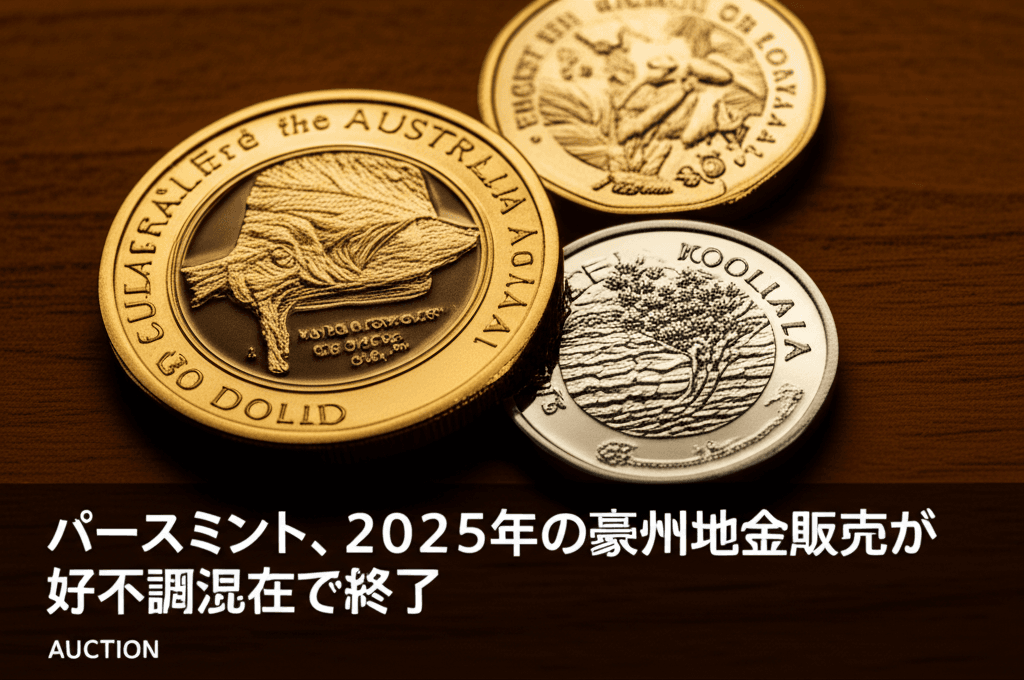
Perth Mint's 2025 Paradox: Gold Up 15-20%, Volumes Down, Revenue Resilient
Auction

Perth Mint's 2025 Paradox: Gold Up 15-20%, Volumes Down, Revenue Resilient

Summary

Perth Mint's 2025 results reveal a structural shift in investor allocation strategy. Gold sales declined in volume but held revenue gains due to 15-20% price appreciation, while silver underperformed with the Gold-Silver Ratio exceeding 80. This numismatic market realignment suggests emerging constraints on retail participation in higher-denomination rare coins.

The Perth Mint concluded 2025 with mixed results for Australian bullion sales, reflecting broader shifts in global precious metals markets and investor behavior. December figures showed declines for both gold and silver compared to the previous month, signaling typical year-end demand slowdown patterns. However, the underlying dynamics driving these fluctuations reveal significant changes in market structure and investment strategy allocation that deserve deeper examination. These products have achieved international recognition for their exceptional design, minting excellence, and strong secondary market liquidity. The 2025 performance data must be contextualized within this established brand equity and institutional credibility. Full-year gold performance significantly exceeded 2024 levels, driven by sustained price appreciation throughout the year. Gold prices demonstrated a consistent upward trajectory. Multiple macroeconomic factors converged to support this strength: geopolitical tensions, persistent inflation concerns, central bank gold accumulation programs (particularly from non-Western institutions), and currency stability anxieties. The return of protectionist policies under renewed U. S. political leadership further enhanced safe-haven demand for gold. Perth Mint gold products, benefiting from international quality standards and exceptional liquidity, attracted both professional investors and institutional allocators seeking portfolio diversification. Conversely, silver concluded 2025 below 2024 levels despite experiencing mid-year price strength. The gold-to-silver price ratio reached 80-plus, indicating relative weakness in silver's market position. This divergence reflects structural factors distinct from gold: industrial demand for silver—particularly from the photovoltaic sector and semiconductor manufacturing—contracted as global economic growth decelerated. Industrial fabrication demand, which typically accounts for 50% of annual silver consumption, weakened noticeably during the latter half of 2025. From an investment perspective, silver's higher price volatility compared to gold, combined with diminished perceived value-storage capability, resulted in investor preference for gold's relative stability and premium appeal as a wealth preservation asset. These differential demand patterns demonstrate a fundamental shift in asset allocation strategy among sophisticated market participants. Institutional investors demonstrated clear preference for gold over silver as inflation hedge and currency crisis mitigation. This represented a dramatic reversal from 2024's silver-friendly market conditions, illustrating the volatility of precious metals investment psychology. Retail investors, constrained by finite purchasing capacity, concentrated their limited capital toward gold products rather than diversifying across multiple metals. This preference consolidation has implications for mint production planning and product portfolio management. A crucial paradox emerges when analyzing Perth Mint performance against rising precious metal prices. While nominal prices increased substantially—gold appreciating approximately 15-20% annually—the purchasing power of consumers actually declined in real terms relative to metal acquisition. Gold prices jumped 65% over the course of the year. This price elevation created barriers to entry for new investors and novice collectors, directly constraining unit sales volumes. The psychological impact of four-digit prices for single ounce products cannot be underestimated in consumer purchasing decisions. However, the apparent decline in unit volume may mask favorable outcomes in revenue metrics. While Perth Mint maintains confidentiality regarding specific dollar-denominated sales figures, the dramatic appreciation in average selling prices—driven entirely by metal price movements—likely resulted in substantial nominal revenue despite reduced physical volumes. This "quantity-revenue disconnect" represents a critical analytical distinction: fewer coins sold at significantly higher per-unit prices may generate equivalent or superior total revenue compared to higher volumes at lower price points. Understanding this dynamic is essential for investors and collectors evaluating market health and production economics. From a collector's perspective, Perth Mint products maintained robust international demand throughout 2025 despite price elevation. The Australian Gold Nugget series, Silver Kangaroo collection, and limited-edition commemorative issues continued commanding premium valuations in secondary markets. Collector-grade products typically sell at 3-10% premiums above metal spot prices, premiums driven by artistry, scarcity, and mintage limitations. This segment's sustained demand—distinct from pure bullion investment demand—reflects Perth Mint's establishment as a premier numismatic producer. Limited edition releases frequently experienced rapid secondary market appreciation immediately following primary distribution, validating the brand's collector appeal. Prospective market analysis suggests that 2026 will hinge critically on macroeconomic policy trajectories. Gold's future trajectory depends predominantly on U. S. inflation developments, Treasury yield movements, and Federal Reserve rate policy. Should interest rates resume decline patterns, gold demand would likely strengthen further, potentially driving prices beyond historical records. Conversely, sustained inflation reduction and rising rate environments could diminish gold's relative attractiveness. Silver's recovery depends substantially on renewable energy sector performance, as photovoltaic demand constitutes the primary driver of industrial fabrication use. Policy support for solar energy deployment will significantly influence silver market conditions. Australia's precious metals production sector provides essential supply-side context for Perth Mint operations. As a major gold and silver producing nation, Australia's mining output directly influences global supply dynamics and Perth Mint's raw material acquisition costs. While 2025's mining sector performed adequately, supported by strong international precious metals demand, rising labor costs and elevated energy prices compressed operational profitability. These inflationary pressures affect Perth Mint's manufacturing economics and competitive positioning relative to other government mints. Investment characteristics of Perth Mint products warrant careful distinction from commodity bullion. Government mint coins combine precious metal content with significant numismatic premium reflecting design quality, brand reputation, and international recognition. This embedded premium—typically 3-10% above spot metal prices—represents value-creation beyond pure material content. Professional investors may view this premium as transaction costs, while collectors regard it as integral product value. Market evolution in 2026 will likely reflect shifting balance between investment-oriented buyers and collector-oriented demand. Strategic opportunities for Perth Mint include enhanced digital distribution channels and direct-to-consumer sales expansion. Online retail capabilities could reduce distribution margins and enhance competitive positioning. Additionally, emphasizing ethical sourcing, sustainability credentials, and fair-trade certifications increasingly appeals to younger investor demographics. Transparency regarding mining origins and environmental stewardship differentiates Perth Mint from competitors and aligns with contemporary investor values. Market participants should closely monitor Perth Mint's first-quarter 2026 sales data and product announcements, as early-year demand patterns frequently establish trends for full-year performance. Additionally, precious metals demand from emerging markets—particularly China and India—warrants continuous observation, as these regions represent the largest consumption centers globally. The interplay between Eastern investment preferences and Western financial market developments will shape international bullion demand in coming months.

Tags

Related Articles

LINE Subscription

Weekly Market Intelligence

Weekly rare coin intelligence — auctions, price action, and analysis, delivered via LINE.

Free · Instant · Block anytime