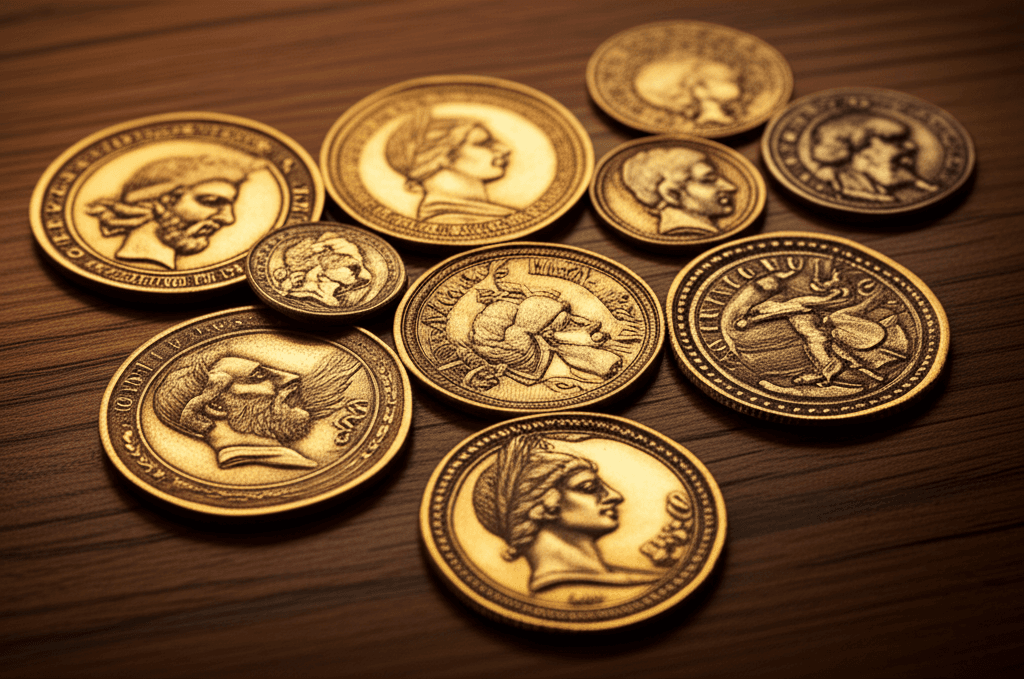
Mendoza's Thomas Spence Halfpenny Token Reflects Boxing History
The rare Thomas Spence halfpenny token (28mm, 10. 57g) featuring legendary boxer Dan Mendoza demonstrates the intersection of numismatics and social history. Minted in London, this token featured Mendoza's bust and a Bridewell Boy on its reverse. The token's dual function—as numismatic artifact and social commentary—reveals how antique coins functioned as unregulated media in 18th-century markets. Collectors increasingly recognize such tokens' value beyond face denomination; their historical authenticity and period-specific iconography command premium valuations in numismatics auctions.
Daniel Mendoza was a legendary boxer who flourished in late 18th-century London and became known as "the father of scientific boxing. " He revolutionized the sport by introducing strategy and technique to replace the brutal fighting style that had dominated boxing throughout its history. Mendoza's innovative approach fundamentally transformed boxing and established the foundations of modern pugilism that continue to influence the sport today. Before his emergence, boxing was essentially an unregulated brawl where physical strength and brute force determined all outcomes. However, Mendoza introduced tactical elements such as footwork, the jab, and defensive techniques, thereby elevating boxing from raw violence to a true competitive sport. Bearing a left-facing portrait of Mendoza, this token testifies to how widely recognized he had become in contemporary society. Measuring 28mm in diameter and weighing 10. 57 grams, it represents a standard circulation token of its period. However, as a privately minted piece, this token likely circulated without Mendoza's explicit authorization, suggesting that his popularity transcended official channels and enjoyed grassroots support among London's general population. Operating outside official mint controls, Spence's tokens allowed for greater design freedom and diverse expression. The inclusion of Mendoza on one of these tokens demonstrates Spence's commercial acumen and sensitivity to contemporary trends; he recognized that boxing and its star were topics of intense public interest worthy of numismatic commemoration. The reverse depicts a figure known as a "Bridewell Boy" holding a swagger stick, conveying satirical social commentary characteristic of Spence's work. The term "Bridewell Boys" referred to young vagrants and lower-class individuals in 18th-century London, symbolizing urban social problems. This design served as social critique rather than mere commemoration, with Spence's political intentions embedded in the imagery. The juxtaposition of Mendoza, the rising sports celebrity, with the socially marginalized "Bridewell Boy" functioned as a metaphor for class mobility, the emergence of new elites, and the weakening of traditional status hierarchies in Georgian society. The plain edge indicates professional minting standards of the period. Spence was not an amateur craftsman but a skilled specialist whose tokens matched official mint quality. His halfpenny tokens are highly valued by modern collectors for both aesthetic and historical merit. Those featuring prominent historical figures like Mendoza possess additional cultural significance, functioning simultaneously as sporting artifacts, numismatic documents, and cultural records that transcend simple monetary function. Understanding Mendoza's historical context is essential for accurately assessing this token's significance. Mendoza dominated London's boxing scene from 1792 to 1795. An emerging middle class sought new forms of entertainment and culture to replace aristocratic traditions. Boxing filled this cultural void and became wildly popular, with Mendoza as its symbolic figure. His matches attracted thousands of spectators and functioned as venues for gambling and social interaction, demonstrating boxing's rapid transformation from disreputable activity to fashionable entertainment. From a numismatic perspective, this token illuminates the reality of private minting in late 18th-century London. When official coinage proved inadequate to meet demand, merchants and craftsmen manufactured tokens to supplement currency circulation. Spence's halfpenny tokens exemplify this phenomenon and provide modern collectors with crucial documentation of London's monetary economy. Mendoza's appearance on such a token proves he was not merely a sports figure but a widely recognized public personality with significant popular appeal across social classes. This token's market value comprises multiple factors: the depiction of historically significant Mendoza, manufacture by renowned minting craftsman Thomas Spence, relative preservation quality, and extreme rarity. While Spence tokens exist in greater numbers, variants featuring Mendoza are particularly scarce. The boxing memorabilia market has flourished recently, with historical boxer-related items attracting attention from both sports history enthusiasts and token collectors. This token satisfies both constituencies, possessing a relatively broad potential buyer base. The significance of this token to numismatic specialists extends across multiple dimensions. From a numismatic perspective, it exemplifies 18th-century London private minting technology standards. Historically, it functions as material evidence reflecting Georgian social interests and popular culture. For sports history scholars, it demonstrates how rapidly boxing achieved mass popularity and social influence. Particularly for historians researching the emergence of "celebrity" as a modern cultural concept, this token serves as crucial visual documentation. The fact that Mendoza's portrait was transformed into token form and circulated as small-value currency powerfully illustrates his celebrity status. Investment considerations regarding this token merit attention given its appeal across multiple collecting categories. Token collectors demonstrate sustained strong demand for Spence halfpennies with steadily appreciating values, particularly for pieces with historical significance and rarity. Simultaneously, the boxing memorabilia market continues expanding, with strong collector interest in items associated with historically important figures like Mendoza. Given recent market growth trends in sports memorabilia, vintage boxing-related items of this antiquity likely face buoyant demand prospects. Preservation condition critically determines this token's value. For a piece over two centuries old, surface wear and minor damage are inevitable. However, this example's clear portrait detail and well-preserved plain edge suggest relatively superior condition standards. In numismatic markets, tokens in "Fine" to "Very Fine" condition grades command strong collector demand and maintain stable pricing. This token's eventual market performance will depend substantially on condition-based evaluation. Mendoza's personal achievements and boxing historical legacy further enhance this token's cultural significance. As the figure who transformed boxing from brutal street fighting into a technique-oriented gentleman's sport, Mendoza occupies crucial importance in boxing history. The techniques he pioneered, particularly jab emphasis and footwork, remain foundational to modern boxing. The fact that contemporary private minting craftsmen captured this historically transformative figure on token form provides direct evidence of contemporary social appreciation, representing an invaluable historical record of how Mendoza was contemporaneously perceived.
Related Articles
Weekly Market Intelligence
Weekly rare coin intelligence — auctions, price action, and analysis, delivered via LINE.
Free · Instant · Block anytime