Baldwin's October 2023 Sale: 18th-Century Political Halfpenny Tokens Reveal Unofficial Coinage Investment Thesis
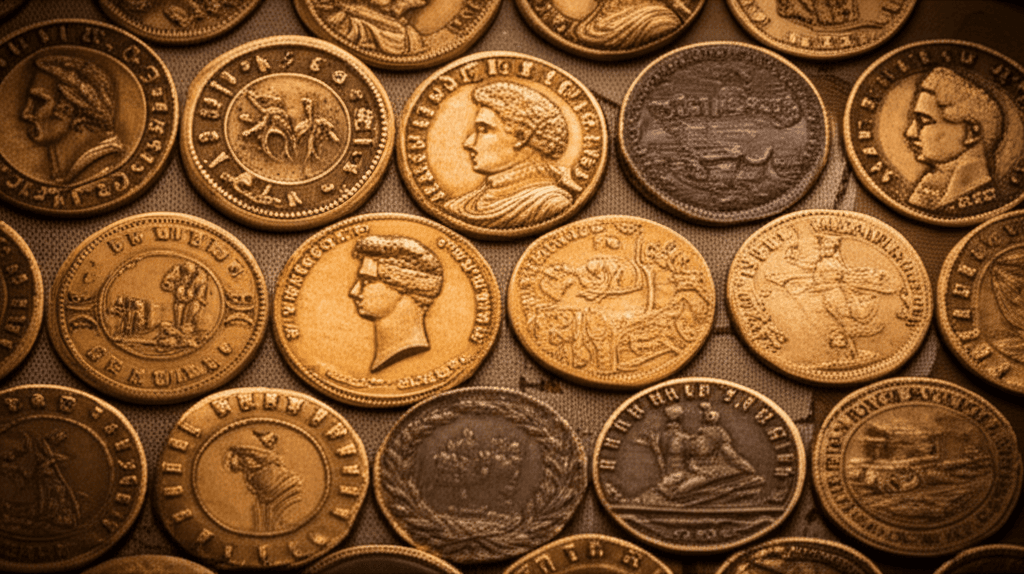
Baldwin's auction on October 11, 2023, will feature an exceptional collection of rare 18th-century political halfpenny tokens—numismatic artifacts born from Royal Mint supply shortages during a period of political turbulence and economic pressure. Each piece functions as primary historical documentation of unofficial coinage and popular political sentiment. This sale marks a scholarly inflection point for political tokens as serious alternative investment assets within the rare coin market, moving beyond numismatic novelty classification.
News Details and Background
Baldwin's, one of the world's most prestigious numismatic auction houses, is preparing to showcase an exceptional collection of 18th-century political tokens at an auction scheduled for October 11th, 2023. This remarkable assemblage of halfpenny tokens represents a significant opportunity for collectors and historians to acquire pieces that embody the political turbulence and economic complexity of late 18th-century Britain. The collection has generated considerable anticipation within numismatic circles, with dealers and serious collectors already expressing strong interest in securing particular lots from this offering.
The tokens included in this Baldwin's sale represent far more than mere currency substitutes. Each piece tells a story of political sentiment, social commentary, and the economic pressures that necessitated the creation of unofficial coinage during a period when the Royal Mint could not adequately supply small denomination currency to meet public demand. The rarity and condition of many items in this collection make it an exceptionally significant event in the numismatic calendar, offering one of the most comprehensive opportunities in recent years to acquire authenticated examples of these historically important artifacts.
The decision to bring this collection to auction reflects growing recognition within the numismatic community that 18th-century political tokens deserve serious scholarly attention and collector investment. These pieces have increasingly attracted academic interest from historians examining the intersection of politics, commerce, and daily life in Georgian England and beyond.
Historical Context
The late 18th century witnessed profound political and social upheaval throughout Britain and its colonies. This era encompassed the American Revolution, the French Revolution's ripple effects, the Industrial Revolution's acceleration, and significant domestic political tensions surrounding parliamentary representation and the rights of the working classes. Political tokens emerged as grassroots expressions of public opinion during this volatile period, functioning simultaneously as practical currency and as vehicles for political messaging.
The proliferation of political tokens occurred precisely because official currency could not meet the economy's needs. The Royal Mint's production of small denominations was insufficient to facilitate everyday commerce, creating a vacuum that private manufacturers and merchants eagerly filled. However, many token producers saw an opportunity to embed their political views within these practical objects, transforming humble pieces of metal into miniature billboards for various causes and candidates.
These tokens circulated among working-class populations who possessed limited access to official coinage and even fewer opportunities to express political opinions through conventional channels. The token's dual function as currency and political statement made it a uniquely democratic form of political expression, allowing ordinary individuals to participate in public discourse by carrying and spending pieces that literally embodied their political convictions. This democratic quality has made 18th-century political tokens invaluable to historians studying popular opinion and grassroots political movements.
Numismatic Analysis
From a purely numismatic perspective, 18th-century political halfpenny tokens present fascinating challenges and opportunities for study. The tokens in this Baldwin's collection demonstrate extraordinary variety in their design, inscriptions, and production techniques. Some specimens exhibit the refined craftsmanship expected from established token manufacturers, while others display the cruder characteristics of hastily produced pieces intended for rapid circulation during specific political moments.
The iconography present on these tokens provides exceptional insight into contemporary political symbolism and rhetoric. Common themes include satirical commentary on prominent political figures, rallies for specific causes such as parliamentary reform or colonial policy positions, and expressions of class consciousness emerging from working populations. Many tokens feature portraits, allegorical figures, or elaborate heraldic designs that communicated complex political messages through visual language accessible to both literate and illiterate populations.
The metallurgical composition of these tokens varies considerably, with specimens produced from copper, bronze, pewter, and various alloys. Such variations reveal important information about token manufacturers' resources, production capabilities, and geographic locations. The collection's breadth allows specialists to examine how different regions and different manufacturers approached the practical and artistic challenges of token production, offering windows into regional economic conditions and manufacturing capabilities.
The condition grades represented within this collection span the full spectrum from worn examples that circulated extensively during their era to remarkably preserved pieces that appear to have seen minimal handling. This range is particularly valuable for research purposes, as it enables scholars to assess how different production qualities affected token durability and longevity in circulation.
Market Trends and Price Analysis
The market for 18th-century political tokens has experienced notable appreciation over the past decade as collectors and institutions increasingly recognize their historical and cultural significance. Previously undervalued compared to official coinage, these tokens have attracted serious investment attention as their importance to numismatic and historical scholarship has become more apparent. The Baldwin's October 2023 auction represents an important test of current market valuations for exceptional examples.
Recent sales of comparable material have demonstrated that exceptional specimens with significant historical importance, desirable provenance, and superior condition can command premium prices that reflect their rarity and appeal. Mid-range examples in good condition typically sell within moderate price ranges, making them accessible to collectors operating within reasonable budgets, while the finest and most historically significant pieces regularly achieve prices that surprise observers unfamiliar with the token market's depth.
The growing availability of reference materials and research tools has contributed meaningfully to market development. Collectors now have access to comprehensive catalogs, specialized databases, and scholarly publications that facilitate more informed purchasing decisions and more accurate price discovery. This improved information environment has professionalized the market, attracting serious collectors who approach token acquisition with scholarly rigor comparable to those collecting official numismatic issues.
Market analysts suggest that strong collector demand, combined with limited supplies of authenticated high-quality examples, supports continued price appreciation for the finest specimens. The Baldwin's collection's prominence should reinforce collector interest and potentially establish important price precedents for specific token types and varieties.
Collector Significance
For collectors focused on political history or social history, 18th-century tokens offer unparalleled advantages over conventional historical documents or artifacts. Unlike written records that reflect official perspectives or educated elite viewpoints, these tokens embody actual popular opinion as expressed through commercial activity. They represent authentic voices of ordinary people engaging in the political discourse of their era, making them invaluable for understanding historical perspectives that might otherwise remain invisible.
Specialized collectors of British numismatics view 18th-century political tokens as essential components of comprehensive collections devoted to British currency history. These pieces fill important gaps between official coinage on one hand and subsequent token coinages on the other, illuminating periods of monetary history that might otherwise seem obscure or incompletely documented. Collectors pursuing systematic examples of token types, denominations, or varieties can find exceptional opportunities within collections of this caliber.
The Baldwin's offering particularly appeals to collectors seeking tokens associated with specific historical events, political figures, or regional interests. Someone collecting pieces related to parliamentary reform movements, early labor activism, or specific geographic regions can potentially assemble a coherent thematic collection from a single auction offering rather than pursuing scattered individual acquisitions across multiple sales and years of patient searching.
For newer collectors or those with emerging interests in the token field, this comprehensive offering provides an exceptional educational opportunity. Examining the full range of designs, styles, materials, and conditions represented within such a collection accelerates the learning process and develops the eye for quality and significance that distinguishes serious collectors from casual accumulator
Comparable Coins
The British Museum and comparable institutions maintain important reference collections of 18th-century political tokens that provide baseline comparisons for auction specimens. Many pieces in the Baldwin's sale likely represent comparable or superior examples to examples housed in these institutional collections, adding to their significance for the numismatic community. Museums increasingly recognize that acquiring duplicate examples of important token types from auction sales advances scholarly research and enriches institutional holdings.
Well-documented sales records from previous Baldwin's auctions and other major houses establish important comparative data for evaluating this collection's material. Similar political tokens of exceptional rarity and importance have sold within ranges that reflect their historical significance and condition quality. The October 2023 sale should produce important market data that shapes pricing expectations for comparable material entering the market in subsequent years.
Private collections of serious token specialists typically include examples from this era and general category, providing additional comparative benchmarks. Active collectors who have assembled significant holdings often possess specialized knowledge about varieties, rarity hierarchies, and market values that influences auction estimates and bidding strategies. The presence of material from this collection will likely stimulate discussion and information exchange within collector networks.
Cataloging descriptions and lot estimates prepared by Baldwin's specialists provide crucial comparative frameworks for assessing the individual pieces within this offering. These professional evaluations reflect the auction house's considerable expertise and their assessment of current market conditions, offering important guidance to prospective bidders and contributing meaningfully to price discovery.
Authentication Considerations
Authenticating 18th-century political tokens presents ongoing challenges due to the variety of manufacturers, the decentralized nature of production, and the absence of centralized documentation comparable to that maintained for official coinage. However, specialists have developed reliable methods for distinguishing authentic period pieces from later reproductions or fantasies. These methods incorporate detailed examination of metallurgical composition, die characteristics, wear patterns, and patina development.
Baldwin's authentication procedures reflect the auction house's commitment to accuracy and the protection of bidders' interests. Examination by experienced specialists includes careful assessment of manufacturing techniques, design characteristics, and physical properties that confirm period authenticity. Professional authentication provides important assurance for significant acquisitions and contributes meaningfully to collector confidence in the market.
Advanced analytical techniques including X-ray fluorescence spectroscopy and metallurgical analysis have increasingly enhanced authentication capabilities. These non-destructive methods can confirm composition and identify anomalies suggesting later manufacture or improper handling. While not required for every lot, such analysis strengthens authentication cases for particularly significant pieces or those with any question marks regarding their provenance or genuineness.
Provenance documentation substantially enhances authentication confidence and adds significant premium value to exceptional pieces. Tokens that can be traced to established collections or documented historical sources command greater confidence and typically realize stronger prices than pieces lacking clear provenance information. The Baldwin's sale should include detailed provenance documentation for major pieces within the collection.
Future Outlook
The October 2023 Baldwin's auction should reinforce the growing recognition that 18th-century political tokens merit serious numismatic and historical attention. Media coverage of significant sales and auction results typically influences collector behavior, attracting new participants to the market and stimulating increased competition for desirable examples. This sale may establish new pricing benchmarks that shape the market's trajectory for several years.
Scholarly interest in these tokens continues expanding as historians and numismatic researchers recognize their unique value as primary historical sources. Academic publications devoted to token classification, iconographic analysis, and historical significance have proliferated in recent years. This scholarly momentum should continue supporting collector demand and contributing to market development.
Museum collecting behavior often follows significant auction results, with institutions seeking to enhance their holdings of token types that prove particularly popular among collectors or that receive scholarly attention. Baldwin's auction results may inspire acquisitions that further legitimize the historical and cultural importance of 18th-century political tokens, creating positive feedback loops that benefit all market participants.
Long-term, the trajectory for 18th-century political tokens appears decidedly positive as collectors mature, scholarship develops, and institutional recognition grows. The Baldwin's October sale represents an important waypoint in the market's evolution, offering exceptional material while generating important information about pricing, preferences, and collector sentiment that will inform the market for years to come.
Related Articles
Weekly Market Intelligence
Weekly rare coin intelligence — auctions, price action, and analysis, delivered via LINE.
Free · Instant · Block anytime