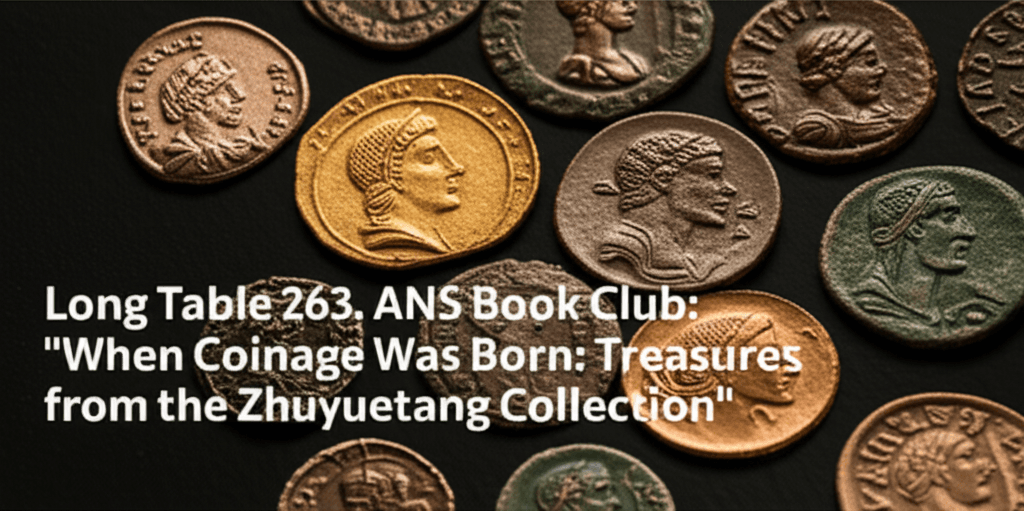
Zhuyuetang Collection: When Ancient Barter Became Standardized Coinage—Feb 20 ANS Event
Leading numismatic experts Ute Wartenberg Kagan and Wolfgang Fischer-Bossert will analyze treasures from the Zhuyuetang Collection—one of the great collections of Greek coinage. This discussion illuminates the economic transition from commodity-based exchange to standardized monetary systems, offering numismatists and collectors fresh insights into early monetary history.
News Details and Background
A discussion will explore one of the great collections of Greek coinage. The event will feature renowned experts Ute Wartenberg Kagan and Wolfgang Fischer-Bossert, both internationally recognized authorities on ancient coinage and monetary history. Their discussion will center on the extraordinary treasures contained within the Zhuyuetang Collection, a remarkable assemblage of coins that illuminate the fascinating period when coinage first emerged as a medium of exchange and economic tool.
This Book Club gathering represents a vital opportunity for numismatists, collectors, and scholars to engage with cutting-edge research on the origins of coinage. The Zhuyuetang Collection has gained prominence in recent years for its exceptional examples of early monetary systems and the coins that bridged ancient barter economies and sophisticated monetary structures. The event promises to deliver fresh insights into how civilizations transitioned from commodity-based exchange to standardized coinage, a transformative moment in human economic history.
The ANS, as the premier institution dedicated to numismatic research and education in North America, continues its tradition of facilitating scholarly discourse through such intimate Book Club sessions. These gatherings have become essential forums for specialists and enthusiasts to deepen their understanding of coin history, explore emerging scholarship, and network with fellow devotees of numismatic science. The February 20 event exemplifies the Society's commitment to making advanced numismatic knowledge accessible to the broader collecting community.
Historical Context
The emergence of coinage represents one of history's most pivotal economic innovations, fundamentally transforming how societies conducted commerce and recorded value. Archaeological and numismatic evidence suggests that standardized coinage developed independently in multiple regions during the late second and early first millennia BCE, particularly in Anatolia, the Mediterranean, and East Asia. These early coinages were not merely economic tools but also served political, cultural, and ideological functions, representing state authority and facilitating long-distance trade networks that had previously relied on barter and commodity exchange.
The Zhuyuetang Collection's significance lies in its comprehensive documentation of this transformative period. By assembling coins from various cultural and geographic contexts, the collection provides comparative perspective on how different civilizations arrived at similar solutions to monetary standardization. The pieces within the collection represent crucial evidence for understanding why societies adopted coined money, how early monetary systems functioned, and what role royal and civic authorities played in establishing trust in standardized metal currency. These questions remain central to contemporary numismatic scholarship and economic history.
Understanding the origins of coinage requires examining not only the coins themselves but also the broader economic, political, and social conditions that necessitated their development. Early coinage emerged in response to increased trade volumes, expanding territorial empires requiring efficient taxation systems, and the need for standardized units of value that transcended local commodity preferences. The coins featured in the Zhuyuetang Collection embody these historical forces, offering tangible evidence of how ancient societies solved complex economic problems through monetary innovation.
Numismatic Analysis
The coins within the Zhuyuetang Collection display remarkable diversity in production techniques, iconographic elements, and metallurgical composition, reflecting the experimental phase through which early coinage evolved. Early coinages often show inconsistencies in weight, purity, and design that later standardized monetary systems would eliminate. Wartenberg Kagan and Fischer-Bossert, through their examination of these pieces, can illuminate the technological evolution from hand-struck coins to more sophisticated minting techniques that ensured greater consistency and security against counterfeiting.
Metallurgical analysis of the collection's specimens reveals fascinating information about the sources of precious metals, trade routes, and economic relationships between ancient societies. Early coinages frequently employed electrum—a natural alloy of gold and silver—before civilizations developed the technology and institutional frameworks necessary to produce pure gold or silver coins. The ratios of gold to silver, variations in purity levels, and the presence of trace elements all provide clues about ore sources, refining techniques, and the economic relationships between different regions. Such analytical work represents the intersection of numismatics, archaeology, and materials science.
Iconographic examination of the Zhuyuetang Collection's coins offers insights into the symbolic vocabulary employed by early monetary authorities. Images of rulers, deities, mythological creatures, and civic symbols conveyed messages about legitimacy, divine favor, and political authority. The stylistic evolution visible across the collection documents how artistic conventions developed and spread through cultural contact and imitation. Understanding these iconographic traditions helps numismatists reconstruct networks of influence and trade relationships that shaped the ancient world.
Market Trends and Price Analysis
Early coinage specimens, particularly those representing the earliest phases of monetary innovation, command significant premiums in contemporary numismatic markets. Collectors and institutions recognize that pieces documenting the origins of coinage represent irreplaceable historical documents with both intrinsic value and scholarly significance. The Zhuyuetang Collection's prominence in recent years has influenced market valuations, with comparable specimens seeing increased demand and rising prices as awareness of their historical importance spreads throughout the collecting community.
The market for early coinage has experienced notable growth over the past decade, driven by increasing recognition of these coins' importance to understanding human economic history. Museums, private collectors, and investment-focused buyers all compete for exceptional examples, particularly pieces showing rare varieties, exceptional strike quality, or unusual metallurgical characteristics. The scholarly attention generated by exhibitions and publications featuring the Zhuyuetang Collection has contributed to this market dynamism, elevating awareness among collectors who previously may not have focused on early monetary systems.
Condition and rarity remain paramount factors in pricing early coinage. Pieces surviving from the earliest phases of coin production are inherently scarce, as many examples were melted and recoined over subsequent centuries. Well-preserved specimens showing clear iconography and consistent weight standards command particularly strong prices. The Zhuyuetang Collection's pieces, presumably selected for their exceptional quality and historical significance, likely represent the upper tier of the market for such material. Collectors seeking to acquire comparable pieces should anticipate substantial investments commensurate with the historical importance and scarcity of early coinage.
Collector Significance
For numismatic collectors, the study of early coinage represents a specialized pursuit that demands significant scholarly engagement and substantial financial resources. However, the intellectual rewards are substantial, as collectors of early coins participate directly in ongoing historical research and engage with fundamental questions about economic development, political authority, and cultural exchange. The Zhuyuetang Collection serves as an inspirational model for serious collectors aspiring to assemble comprehensive holdings that document major historical transformations.
The February 20 Book Club event offers collectors an extraordinary opportunity to access expert scholarship and gain deeper understanding of their collections or potential acquisitions. Direct engagement with scholars like Wartenberg Kagan and Fischer-Bossert provides insights that cannot be obtained from published literature alone, as these experts can address specific questions, discuss recent research developments, and contextualize individual specimens within broader historical narratives. Such interactions strengthen the collector community and foster appreciation for rigorous numismatic scholarship.
Building a meaningful collection of early coinage requires patience, financial commitment, and educational investment. Collectors must develop expertise in authentication, understand metallurgical variations, recognize die characteristics and striking sequences, and contextualize pieces within chronological and geographic frameworks. The Zhuyuetang Collection demonstrates how systematic collecting can create a resource of genuine scholarly value. Collectors inspired by such exemplary assemblages should approach their own collection-building activities with similar rigor and commitment to historical documentation.
Comparable Coins
Numerous museums and institutions maintain significant holdings of early coinage comparable to treasures within the Zhuyuetang Collection. The British Museum, the Bibliothèque Nationale de France, the American Numismatic Society itself, and various specialized museums throughout the Mediterranean and Asia house extensive collections of early coins that document the origins of coinage. These institutional holdings provide important comparative context and allow scholars to examine variations and developments across geographic and cultural boundaries.
The most directly comparable pieces to the Zhuyuetang Collection specimens would be other early coins from the same chronological period and cultural contexts. Early Lydian coinage, ancient Chinese early bronze and precious metal coinage, and early Greek emissions represent parallel developments that shed light on the universal factors driving monetary innovation. Scholars examining the Zhuyuetang Collection naturally compare its pieces against these comparative materials, identifying similarities and differences that illuminate regional variations in how societies approached monetary standardization.
Private collections also maintain significant holdings of early coinage comparable to the Zhuyuetang Collection. Serious collectors have assembled comprehensive holdings documenting early monetary systems, building on systematic research and careful acquisition over decades. Such collections sometimes generate scholarly publications and exhibitions that contribute substantially to numismatic knowledge. The availability of comparable pieces in both institutional and private hands creates opportunities for comparative study and validation of research conclusions drawn from the Zhuyuetang Collection's material.
Authentication Considerations
Authentication of early coinage presents distinctive challenges distinct from those encountered with later coinages. Early coins, produced through hand-striking without sophisticated standardization controls, display natural variations in weight, thickness, and strike quality that can complicate authentication efforts. Modern counterfeits of early coins exist, particularly of pieces commanding significant market values. Expert authentication requires comprehensive knowledge of die characteristics, striking patterns, wear patterns, and metallurgical composition that only experienced specialists possess.
The Zhuyuetang Collection's pieces presumably represent authenticated specimens thoroughly examined by expert numismatists. Access to high-quality reference collections and detailed comparative analysis enables specialists to identify rare die varieties, distinguish period striking from later restrike activity, and confirm authenticity through multiple analytical approaches. Collectors acquiring early coinage should insist on documented provenance and expert authentication. Reputable dealers and auction houses provide detailed cataloging and expert opinions that justify premium prices through assurance of authenticity and scholarly documentation.
Metallurgical and chemical analysis provides additional authentication tools for early coinage specialists. X-ray fluorescence (XRF) and other non-destructive analytical techniques can confirm gold and silver content, identify unusual trace elements suggesting specific ore sources, and detect evidence of ancient or modern manipulation. Examination under magnification reveals die characteristics, workmanship details, and wear patterns that authenticate pieces. The combination of visual examination, comparative analysis, and scientific testing provides comprehensive authentication frameworks that responsible collectors and institutions employ when acquiring early coinage.
Future Outlook
Scholarly interest in the origins of coinage shows no signs of diminishing, as numismatists continue refining understanding of how and why monetary systems developed across different cultures. The Zhuyuetang Collection will likely remain central to such research for decades, generating publications, exhibitions, and continuing scholarly reexamination as new analytical technologies and methodologies become available. The February 20 Book Club event represents one moment in ongoing scholarly engagement with these remarkable materials, with future discussions building on insights generated through such forums.
The broader numismatic and collecting community can anticipate continued appreciation for early coinage as awareness of its historical significance spreads. Museums will likely compete for exhibition opportunities to showcase early coinage treasures, providing public engagement with numismatic scholarship. Collectors will increasingly recognize early coins as both intellectually rewarding pursuits and sound long-term investments. Educational institutions will incorporate early coinage into curricula addressing economic history, providing students with direct engagement with primary historical sources.
The American Numismatic Society's continued emphasis on scholarly discussion and public engagement suggests a vibrant future for numismatic scholarship and community building. Events like the February 20 Book Club discussion exemplify how institutions can facilitate meaningful engagement between experts and enthusiasts, advancing collective understanding while strengthening the bonds of the numismatic community. As interest in the origins of coinage and the Zhuyuetang Collection continues expanding, such scholarly forums will remain vital venues for advancing knowledge and inspiring new generations of numismatists.
Related Articles
Weekly Market Intelligence
Weekly rare coin intelligence — auctions, price action, and analysis, delivered via LINE.
Free · Instant · Block anytime