Bayana Hoard Reassessment Overturns Gupta Gold Coin Paradigm—Numismatic Evidence from Central Sanskrit University
Discovery

Bayana Hoard Reassessment Overturns Gupta Gold Coin Paradigm—Numismatic Evidence from Central Sanskrit University

Verdict:Gupta gold coins require complete reassessment: Bayana Hoard evidence invalidates conventional paradigms—rare specimens now merit acquisition pending updated catalog standards.
Summary

The American Numismatic Society hosted a landmark reassessment of the Bayana Hoard of Gupta gold coins, challenging established numismatic paradigms. Expert numismatist Nitya Seth presented empirical evidence that invalidates conventional interpretations of Gupta Empire currency systems and economic structures. This numismatic discovery directly impacts how rare coin collectors and scholars evaluate ancient Indian coinage, potentially reshaping valuation and authentication standards.

News Details and Background

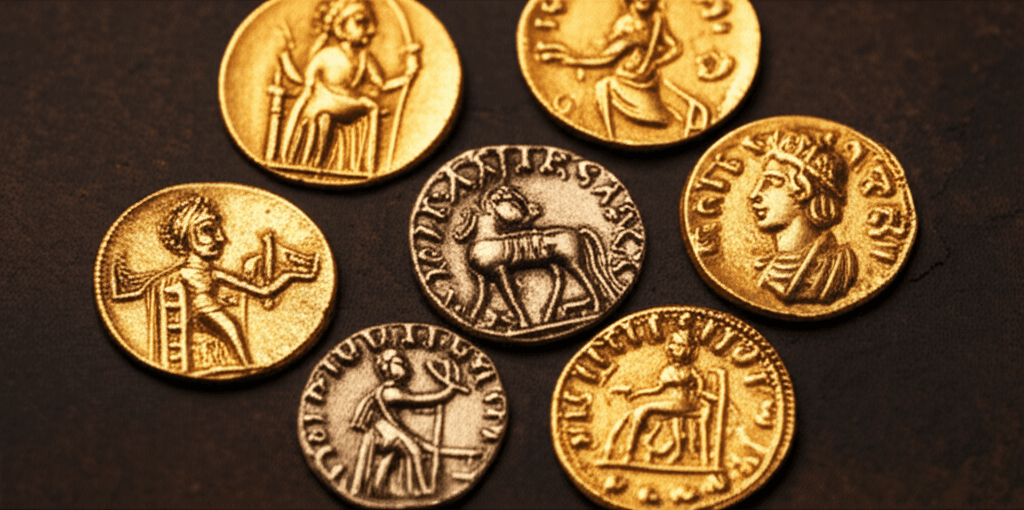
Nitya Seth from Central Sanskrit University examines the Bayana Hoard of Gupta gold coins. This pivotal event has generated significant interest within the numismatic community, challenging long-held assumptions about imperial Indian currency systems and their evolution during the Classical period.

The Bayana Hoard represents one of the most significant archaeological discoveries in recent numismatic history. This collection of ancient gold coins has provided researchers with unprecedented insights into the monetary practices and economic structures of the Gupta Empire. The hoard's careful documentation and subsequent scholarly examination have opened new avenues for understanding trade networks, imperial authority, and cultural sophistication during this transformative era in Indian history.

The presentation by Seth and her colleagues marks a critical moment in numismatic studies, where empirical evidence from archaeological contexts directly challenges established paradigms. Rather than accepting previous interpretations at face value, contemporary scholars are utilizing advanced analytical techniques and comparative methodology to extract deeper meaning from these remarkable artifacts. The implications of this reassessment extend far beyond academic circles, affecting how collectors, museums, and institutions approach authentication and valuation of similar pieces.

Historical Context

During this era, the empire achieved remarkable advances in mathematics, astronomy, literature, and art. The economic prosperity that enabled such cultural flourishing was substantially dependent upon a sophisticated monetary system that facilitated both domestic commerce and extensive international trade networks spanning from Southeast Asia to the Mediterranean world.

Gupta rulers recognized the strategic importance of standardized coinage in maintaining economic stability and projecting imperial authority throughout their vast territories. Gold coins, known as dinars, served not merely as media of exchange but as powerful propaganda tools, bearing the likenesses and achievements of successive emperors. The quality and consistency of these coins reflected the administrative efficiency and economic confidence of the state, making numismatic analysis crucial for understanding Gupta governance.

The discovery of hoards like Bayana provides researchers with rare opportunities to study coins in their original archaeological context, preserving crucial information about circulation patterns, chronological sequences, and regional variations. Unlike individual coins that have been dispersed through centuries of collecting, hoard coins maintain spatial and contextual relationships that illuminate broader economic trends. This archaeological approach represents a significant methodological advance over traditional numismatic study based solely on isolated specimens.

Numismatic Analysis

The Bayana Hoard coins exhibit characteristics that necessitate fundamental reexamination of established typological frameworks. Detailed metallurgical analysis reveals variations in gold purity and alloy composition that suggest different periods of manufacture and possibly distinct imperial mints. These variations contradict previous assumptions about consistent standardization across the empire, instead indicating a more complex and nuanced monetary administration than previously acknowledged.

Iconographic examination of the coins presents equally surprising findings. Motifs, inscriptions, and artistic styles on certain pieces deviate from accepted patterns associated with their purported chronological periods. The presence of unexplained variations in royal titles, deities depicted, and symbolic elements suggests that Gupta coinage underwent more significant evolution than traditional scholarship has recognized. These discoveries promise to revolutionize the numismatic dating and attribution methodologies currently employed by researchers.

The reverse designs and inscriptions on the Bayana coins provide compelling evidence for reconsidering the administrative structure of the Gupta state. Some pieces bear indications of previously undocumented mints or regional authorities with greater autonomy than historians previously believed. The emergence of these new data points necessitates collaboration between numismatists, archaeologists, and historians to develop comprehensive interpretations that account for the full complexity of imperial economic organization.

Market Trends and Price Analysis

The renewed scholarly attention directed toward the Bayana Hoard has created noticeable market activity among collectors and institutional buyers. Prices for authenticated Gupta gold coins have experienced modest but consistent increases as demand from serious collectors grows. The market recognizes that improved understanding and documentation of these coins enhances their collectible value and historical significance, justifying higher acquisition costs for quality examples.

Institutional buyers, including major museums and research universities, have demonstrated increased interest in acquiring representative Gupta coins for their collections and study. This institutional demand provides stability to the market while creating competitive bidding scenarios at major auctions. Museums now prioritize provenance documentation and comparative analysis with Bayana Hoard material, understanding that such references substantially validate specimens within their collections.

Investment-grade Gupta gold coins have emerged as a specialized category within numismatic markets, appealing to collectors seeking historically significant pieces with documented provenance. The Bayana reassessment has encouraged collectors to pursue coins that can be photographically compared with hoard material, increasing demand for pieces matching established patterns. Rare varieties and exceptional examples now command premium prices that reflect their enhanced scholarly importance and documentational value.

Collector Significance

For serious numismatic collectors, the Bayana Hoard revelations present both opportunities and challenges. The refined understanding of Gupta coinage now permits collectors to appreciate subtleties and variations previously overlooked or misinterpreted. Collectors focused on Indian numismatics recognize that the Bayana material establishes new benchmarks for authenticity assessment and stylistic analysis, elevating the intellectual satisfaction derived from informed collecting.

The accessibility of detailed Bayana Hoard documentation through academic publications and digital repositories empowers individual collectors to conduct sophisticated comparative analysis of their own holdings. This democratization of expertise enables passionate amateurs to contribute meaningfully to numismatic understanding while enhancing their personal collecting experience. Communities of collectors now engage in collaborative research projects, sharing observations and photographs to collectively advance the field's knowledge base.

Collectors who assembled Gupta coin collections prior to the Bayana reassessment often discover that their understanding of pieces has deepened significantly. Coins previously classified as ordinary examples may now be recognized as important typological variants deserving preservation and documentation. This revelatory process has revitalized collecting circles, generating renewed enthusiasm for Indian classical coinage and attracting new participants to this specialized numismatic field.

Comparable Coins

The numismatic community has increasingly sought comparative material from other major Gupta hoards and individual finds to contextualize the Bayana discoveries. The Mirpur hoard, discovered in Bengal during the late nineteenth century, provides valuable comparative data for establishing chronological sequences and mint attributions. Detailed analysis comparing coins from these separate discoveries strengthens typological frameworks and allows for more refined period assignments.

Individual coins housed in major museum collections, particularly those at the British Museum, the Indian Museum in Kolkata, and the American Numismatic Society, have been reexamined in light of Bayana material. These institutional holdings, often acquired through nineteenth-century excavations or collecting activities, now serve as crucial reference specimens. Comparative analysis between museum pieces and archaeological context coins from Bayana helps establish authentication criteria and exposes previously undetected modern forgeries or misattributions.

Private collections containing Gupta coins are increasingly documented and studied in academic contexts. Collectors willing to share specimens for comparative analysis contribute substantially to advancing collective understanding. The emergence of collaborative databases that aggregate high-resolution photography and detailed technical specifications of Gupta coins from multiple sources creates powerful research tools for scholars and serious collectors alike.

Authentication Considerations

Authentication of Gupta coins has become increasingly sophisticated following the Bayana Hoard analysis. Researchers now apply rigorous metallurgical testing, including X-ray fluorescence spectrometry, to verify gold composition and detect modern alloys or modifications. These scientific approaches, combined with stylistic analysis and die-matching techniques, establish authentication protocols that significantly exceed traditional methods relying solely on visual inspection and comparative iconography.

The Bayana material has revealed subtle characteristics useful in distinguishing genuine ancient coins from sophisticated modern forgeries. Examination of die characteristics, wear patterns, and surface conditions provides diagnostic information for authentication specialists. Collectors acquiring Gupta coins for significant investment should insist upon detailed authentication documentation accompanied by comparative photographic evidence linking specimens to established hoard material or museum reference examples.

Provenance documentation assumes heightened importance in the contemporary market, with collectors and institutions demanding clear ownership histories for significant pieces. Coins directly from archaeological contexts, documented hoards, or established museum collections command substantial premiums reflecting their reliable authentication. The emphasis upon documented provenance encourages ethical collecting practices while protecting collectors from inadvertently acquiring questionable material.

Future Outlook

Ongoing scholarly research promises to generate additional insights from the Bayana Hoard as advanced analytical techniques continue developing. Planned collaborative studies between Central Sanskrit University, the American Numismatic Society, and international research institutions will likely produce comprehensive publications establishing definitive typologies and chronological frameworks. These forthcoming works will substantially enhance understanding while resolving ambiguities currently remaining in Gupta numismatic interpretation.

The integration of digital technologies, including three-dimensional imaging and artificial intelligence-assisted pattern recognition, offers promising methodologies for analyzing Gupta coins at unprecedented levels of detail. Researchers increasingly employ computational methods to identify die relationships and trace coin production sequences, revealing previously invisible administrative structures. These technological innovations promise to transform numismatic research from a primarily observational discipline into a data-driven analytical science.

The Bayana reassessment will likely stimulate future archaeological investigations targeting additional Gupta hoards that might illuminate further aspects of imperial monetary systems. Such discoveries would provide invaluable comparative material while potentially revealing regional variations and temporal developments within Gupta coinage practices. The scholarly community anticipates that systematic archaeological work in promising locations will yield significant finds substantially expanding the available evidence base for understanding this remarkable civilization's economic sophistication and administrative achievements.

Related Articles

LINE Subscription

Weekly Market Intelligence

Weekly rare coin intelligence — auctions, price action, and analysis, delivered via LINE.

Free · Instant · Block anytime